


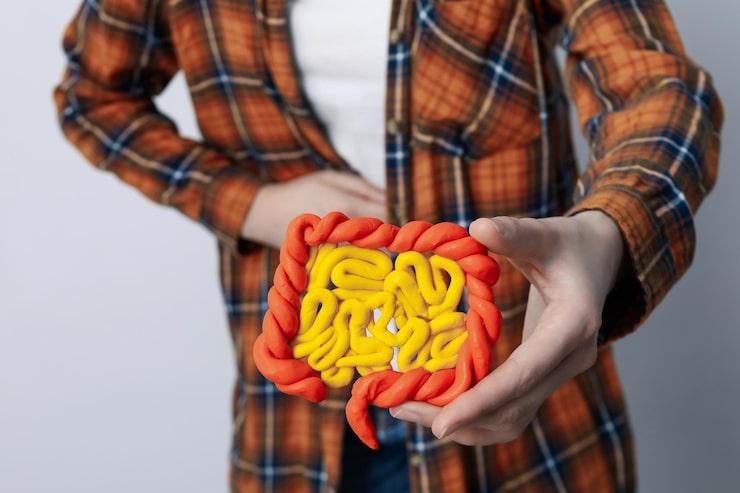
Colon Polyps and How They Can Lead to Colon Cancer
Learn all you need to know about colon polyps and the risk they carry with advise from the best doctors at Prakash Hospital, Noida.
22 Sept 2025
by Prakash Hospital
by Prakash Hospital

Woman covering her mouth while coughing, representing symptoms of dry cough and respiratory irritation.
A dry cough is a common health complaint characterized by a persistent cough without mucus or phlegm. Unlike a productive cough, a dry cough can feel irritating and exhausting, often worsening at night or in dry environments. While it may seem minor, a dry cough can interfere with sleep, daily activities and overall quality of life if left untreated.
Effective symptom management and the avoidance of complications are made possible by an understanding of the causes of dry cough and suitable treatment options.
A dry cough, sometimes referred to as a non-productive cough, does not produce mucus. It is frequently brought on by irritation or inflammation of the airways and throat. Depending on the underlying cause dry coughs can last a few days or develop into a chronic condition.
The common cold, the flu or COVID-19 are examples of viral infections that frequently cause dry cough. Even if other symptoms get better the cough might still be present.
Dry cough and throat irritation can be brought on by exposure to allergens like mold dust pollen or pet dander. allergies. The primary symptom of cough-variant asthma may be a dry cough, particularly at night or following physical activity.
A persistent dry cough may result from stomach acid irritating the throat due to gastroesophageal reflux disease.
Dry coughing can be brought on by respiratory tract irritation from pollution, smoke, cold air and dry indoor air.
Dry cough is a side effect of some medications particularly those for high blood pressure.
In addition to irritating the airways, tobacco smoke can cause a chronic dry cough.
Coughing without phlegm and irritation can result from laryngeal or throat inflammation.
Children who have a dry cough may have allergies, asthma, viral infections or irritant exposure. In order to rule out underlying conditions children who have a persistent cough should be evaluated.

Child coughing with hand near mouth, illustrating common respiratory symptoms like dry cough or throat irritation in children.
A thorough medical history and physical examination are the first steps in the diagnosis process. Doctors may inquire about the duration triggers and related symptoms. Other tests could be included like chest xray, allergy screening, tests for lung function or acid reflux assessment. If an infection is suspected, blood tests are performed.
A correct diagnosis aids in determining the best course of action.
The underlying cause and severity of the symptoms determine the course of treatment. drugs. Depending on the cause doctors may recommend antihistamines, acid reflux drugs, cough suppressants or inhalers. Most viral coughs get better with supportive care. Antibiotics are not necessary unless there is a bacterial infection. Asthma-related cough can be managed with inhalers and prophylactic drugs. Symptoms can be lessened by taking prescription drugs and avoiding allergens.
Coughing is lessened and throat irritation is relieved by consuming warm liquids.
Adding moisture to indoor air helps keep the airways and throat from becoming dry.
Coughing triggers are lessened by avoiding smoke pollution and strong smells.
For adults and children older than one year, consuming honey may help ease sore throats and lessen coughing.
This lessens irritation and inflammation in the throat.
Coughing at night can be lessened by sleeping with the head up, especially if you have acid reflux.
Some people's throat irritation may be exacerbated by cold drinks.
A dry cough that lasts longer than three weeks is deemed chronic and needs to be evaluated by a doctor. A persistent cough could be a sign of asthma or other long-term respiratory disorders.
Warning indicators that call for medical attention:

Adult patient sitting with a doctor during a medical consultation, representing professional diagnosis for cough and respiratory issues.
If your dry cough continues, gets worse, or is accompanied by other worrisome symptoms, see a doctor. Early assessment guarantees the right course of treatment and helps avoid complications. Prakash Hospital offers thorough treatment and professional evaluation for respiratory disorders and chronic cough. Prakash Hospital guarantees precise diagnosis, efficient treatment and long-term relief for respiratory health issues thanks to its skilled medical staff, cutting-edge diagnostic equipment and patient-centered care.

Anti-wrinkle injections and hyaluronic acid fillers that soften lines and restore facial volume, with no downtime.
Treats the uterine lining to make heavy periods lighter or stop them, with no cuts, for women who want no more children.
Removes a breast lump after tests, usually as day care, and sends it to the lab to confirm what it is.
Free tools to check your weight, plan a pregnancy, track calories and more.
We offer expert care across key specialties, including Medicine, Cardiology, Orthopaedics, ENT, Gynaecology, and more—delivering trusted treatment under one roof.
Learn all you need to know about colon polyps and the risk they carry with advise from the best doctors at Prakash Hospital, Noida.
22 Sept 2025
by Prakash Hospital

Learn the causes of fever in children, temperature guidelines by age, warning signs, and when to seek medical care from Prakash Hospital.
25 Feb 2026
by Prakash Hospital

How to get glowing skin naturally — Indian diet, hydration, sleep, and skincare tips that actually work. Prakash Hospital Noida.
9 Sept 2026
by Prakash Hospital

Prostate problems — symptoms of BPH, prostatitis and prostate cancer, the tests used to diagnose them, and when to see a doctor. Prakash Hospital Noida.
5 Oct 2026
by Prakash Hospital

Learn about urinary tract infection (UTI), including symptoms, causes, diagnosis, treatment options, and prevention tips at Prakash Hospital.
17 Feb 2026
by Prakash Hospital

जानिए किडनी फंक्शन टेस्ट (KFT) क्या होता है, यह किन-किन पैरामीटर्स को मापता है और किडनी की सेहत के बारे में क्या जानकारी देता है।
11 May 2026
by Prakash Hospital


Book a consultation with Prakash Hospital's specialists — 24/7 emergency care, 100+ doctors, NABH accredited.
View All Departments