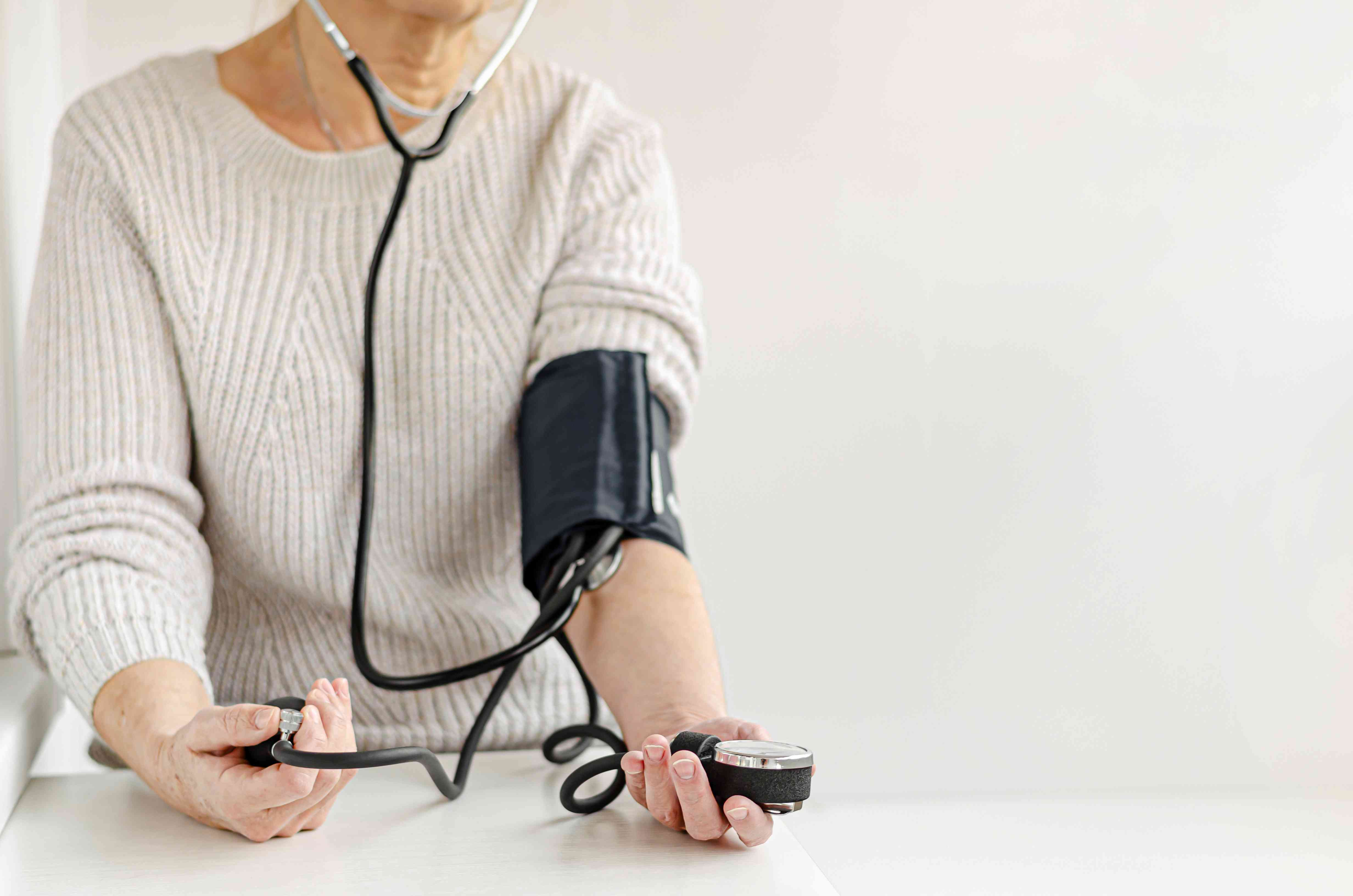
Older woman self-checking her blood pressure with a manual device.
High blood pressure is one of those conditions where most of the management happens outside the clinic. The doctor prescribes medication, measures your BP at appointments, and adjusts the plan. But the day-to-day work — what you eat, how you move, how you sleep, whether you smoke, how you manage stress — determines whether the numbers stay in the safe range.
The research on lifestyle modification is clear: the right changes lower blood pressure meaningfully, reduce how much medication is needed, and significantly cut the risk of the complications (heart attack, stroke, kidney failure) that make hypertension dangerous.
This isn't advice to avoid medication if it's needed. For most people with stage 2 hypertension (above 140/90) or those with other cardiovascular risk factors, lifestyle alone is insufficient. But lifestyle changes work alongside medication and sometimes allow dose reduction over time.
Measured in mmHg, two numbers:
Systolic (top number): pressure when the heart beats.
Diastolic (bottom number): pressure when the heart rests between beats.
Normal: below 120/80
Elevated: 120–129 / below 80
Stage 1 hypertension: 130–139 / 80–89
Stage 2 hypertension: 140/90 or above
Hypertensive emergency: 180/120 or above, especially with symptoms
The target for most treated hypertensives is below 130/80. For some older adults or those with kidney disease, targets may differ — this is an individualised clinical decision.
Blood pressure varies throughout the day — lower when relaxed, higher with activity, stress, or anxiety. For reliable readings, measure seated and calm after five minutes of rest, both arms (use the higher reading consistently), morning and evening.
The Dietary Approaches to Stop Hypertension (DASH) diet is specifically designed for blood pressure management and has consistent, strong evidence. Its principles translate well to Indian eating:
Emphasise: fruits, vegetables, whole grains, lean protein (legumes, fish, chicken), low-fat dairy, nuts and seeds.
Reduce: sodium (salt), saturated fat, red meat, sweets, sugary drinks.
It's not a radical departure from a healthy Indian diet — it's a tuned version of one.
This is the most well-established dietary intervention for blood pressure. Sodium causes the body to retain water, increasing blood volume and pressure. In sodium-sensitive individuals (more common in Indian populations, people with diabetes, and older adults), the effect is significant.
The World Health Organization recommends under 5 grams of salt per day. Most Indians consume 8–12 grams daily.
Practical reductions:
This single change can reduce systolic blood pressure by 4–8 mmHg — comparable to one blood pressure medication in many people.
Potassium helps the kidneys excrete sodium, directly opposing hypertension. Most Indians are significantly under-consuming potassium.
Rich sources: bananas, oranges, mosambi, guava, sweet potato, potato, tomatoes, coconut water, spinach, dal, rajma, curd, fish.
Increasing fruit and vegetable intake simultaneously reduces sodium density and increases potassium — a double benefit.
Note: people with kidney disease need medical guidance on potassium intake — high potassium can be harmful in reduced kidney function.
Regular aerobic exercise reduces systolic blood pressure by 5–8 mmHg. This is a significant effect from a free, side-effect-free intervention.
30–45 minutes of moderate aerobic exercise most days: brisk walking, cycling, swimming, dancing. Consistency matters more than intensity.
Resistance training adds independent benefits — it improves endothelial function and insulin sensitivity, both relevant to blood pressure.
Avoid very high-intensity exercise without medical clearance if BP is uncontrolled — it transiently raises BP significantly.
Being overweight is a major driver of hypertension. For every 1 kg of weight lost, systolic BP drops by approximately 1 mmHg. Losing 5–10 kg in someone who is overweight can reduce blood pressure significantly — sometimes enough to reduce or eliminate medication.
Even without significant weight loss, losing abdominal fat (waist circumference) improves blood pressure through reduced insulin resistance and cortisol.

People engaging in regular exercise to help naturally lower high blood pressure and improve heart health.
Alcohol raises blood pressure, both acutely and chronically. Heavy drinking is a major cause of secondary hypertension. Even moderate regular drinking contributes.
If blood pressure is elevated and you drink regularly, reducing or stopping alcohol is one of the most effective interventions available. Reduction from heavy to moderate drinking can reduce systolic BP by 5–8 mmHg.
Smoking causes acute blood pressure elevation with every cigarette and accelerates arterial stiffness — a major determinant of systolic hypertension. Every cigarette constricts blood vessels temporarily. Chronic smokers have stiffer, less responsive arteries.
Stopping smoking is essential for cardiovascular risk reduction regardless of blood pressure — but it also removes an ongoing contributor to pressure elevation.
Acute stress raises blood pressure transiently. Chronic stress maintains elevated cortisol, which raises blood pressure chronically. The cortisol-blood pressure connection is direct and physiological.
Stress management approaches with some evidence:
These aren't substitutes for medication but genuine BP-lowering interventions alongside it.
Sleep deprivation raises blood pressure. Poor sleep quality (including from sleep apnea) keeps overnight blood pressure elevated rather than showing the normal nighttime dip. Treating sleep apnea in those who have it frequently produces significant blood pressure reduction — often reducing medication needs.
7–8 hours of quality sleep consistently. And if there's snoring, unrefreshing sleep, or morning headaches, evaluate for sleep apnea.
Garlic: allicin reduces arterial stiffness and has modest blood pressure-lowering effects. Cook with it regularly.
Berries: anthocyanins support vascular function. Seasonal fruits broadly.
Dark chocolate (small amounts): flavonoids reduce arterial stiffness. One to two squares of 70%+ cocoa daily.
Beet and leafy greens: high in nitrates that convert to nitric oxide, a vasodilator. Spinach, arugula, beets.
Omega-3 fatty acids: fatty fish, walnuts, flaxseeds. Support vascular function and reduce arterial stiffness.
Green tea: evidence for modest BP reduction from regular consumption.
Coconut water: potassium-rich, some direct evidence for BP reduction.
Measuring BP at home with a validated upper-arm cuff (not wrist) is valuable for:
Measure twice, once in the morning before medication and once in the evening. Record the results. Share with your doctor at appointments.
Medication is typically needed when:
Common medication classes: calcium channel blockers (amlodipine), ACE inhibitors (enalapril, ramipril), ARBs (telmisartan, losartan), thiazide diuretics. Often two or more are combined.
Medication for hypertension is safe, effective, and generally lifelong. Missing doses or stopping without medical guidance allows BP to rise again, increasing stroke and heart attack risk.
High blood pressure damages target organs — heart, kidneys, brain, eyes. Regular monitoring:
"I feel fine, so my BP must be normal." Hypertension has no symptoms in most people until complications arrive.
"I can stop medication once BP is normal." It's normal because of the medication.
"High BP only happens to stressed people." Stress contributes but isn't the only cause. Genetics, diet, weight, and age are major factors.
"Home monitors are inaccurate." Validated upper-arm monitors are reliable for home use.
"Salt-restricted diet is bland." The palate adjusts within 2–3 weeks. Herbs, lemon, tamarind, and spices replace salt effectively.
At Prakash Hospital Noida, our cardiologists and physicians provide comprehensive hypertension management — including blood pressure evaluation, lifestyle counselling, medication prescription, and monitoring for target organ damage (kidneys, heart, eyes). Home monitoring guidance and dietary counselling are part of care.
Whether you're in Sector 18, Sector 62, Greater Noida West, or anywhere nearby, Prakash Hospital Noida is a trusted name for cardiology and hypertension management in Noida.
 Copy
CopyWe offer expert care across key specialties, including Medicine, Cardiology, Orthopaedics, ENT, Gynaecology, and more—delivering trusted treatment under one roof.


Book a consultation with Prakash Hospital's specialists — 24/7 emergency care, 100+ doctors, NABH accredited.

Prakash Hospital Pvt. Ltd. is a 100 bedded NABH NABL accredited multispecialty hospital along with a center of trauma and orthopedics. We are in the service of society since 2001.
OUR SPECIALITIES
Patient Services
PROCEDURES
Contact Us
D – 12A, 12B, Sector-33, G. B. Nagar, Noida, Uttar Pradesh 201301
+91-8826000033


© 2026 All rights reserved.
Designed and Developed by Zarle Infotech