


पीसीओएस (PCOS) क्या है?
पीसीओएस यानी Polycystic Ovary Syndrome क्या है, इसके लक्षण, कारण, जांच और इलाज के तरीके हिंदी में जानें।
23 Jan 2026
by Prakash Hospital
A keyhole procedure that can restart regular ovulation in women with PCOS who want to conceive and haven't responded to ovulation tablets.

With PCOS, months can go by without a period, and when you're trying for a baby every one of those months counts. Many women ovulate with letrozole or clomiphene tablets and some weight loss. For those who don't, ovarian drilling is one of the next options.
Laparoscopic ovarian drilling is done through small keyhole cuts. The surgeon uses a fine needle carrying electrical energy (diathermy) to make a few tiny punctures on the surface of each ovary, usually about four. This destroys a small amount of the tissue that makes excess male hormones (androgens). As androgen levels fall, the hormone signals between the brain and ovaries rebalance, and in many women the ovaries start releasing an egg on their own.
About half or more of women start ovulating after drilling, and many conceive within 6 to 12 months. Those who don't often respond better to ovulation tablets afterwards. Because it usually leads to one egg a cycle, it doesn't raise the chance of twins the way fertility injections can. It doesn't cure PCOS, though, and the effect can wear off.
PCOS care in our gynaecology department runs from diagnosis to fertility support, including hormonal treatment, diet and lifestyle advice, and laparoscopic surgery. Before drilling, we check your tubes and your partner's semen report, so the operation is offered only when lack of ovulation is the real problem.
Ovarian drilling is a fertility treatment for women with PCOS who aren't ovulating. It's usually a second-line option, after tablets.
The standard method. A fine insulated needle delivers a short, measured burst of electrical energy at each point, so that as little tissue as possible is affected.
Both ovaries are usually treated. Some surgeons treat only one to protect egg reserve, and studies suggest results can be similar.
A dye test (chromopertubation) is often done during the same laparoscopy to confirm the tubes are open, and a hysteroscopy may be added to check the inside of the uterus.
You're asleep under general anaesthesia for the 30 to 60 minutes the operation takes.
A small cut at the navel takes the camera, and one or two more take the instruments. The surgeon inspects the pelvis. PCOS ovaries typically look enlarged, smooth and pearly white.
Each ovary is held steady and the needle is applied at a few points, usually about four, for a few seconds each. The ovary is cooled with sterile fluid to protect the surrounding tissue.
If planned, a blue dye is passed through the cervix to show that the tubes are open.
The pelvis is rinsed with fluid to reduce the chance of adhesions, the gas is let out and the cuts are closed.
Mild tummy cramps and shoulder-tip pain from the gas are common. Most women go home the same day or the next morning.
Rest and walk. Most women return to work within a week. You can start trying for a baby once you feel comfortable.
Your gynaecologist tracks your cycles, often with ultrasound or a progesterone blood test, to see whether you're ovulating. Many women have a period within about 6 weeks.
If you're ovulating but not yet pregnant, keep trying. If ovulation hasn't returned by about 3 months, tablets are usually restarted. If there's still no pregnancy after 6 to 12 months, the plan moves on to injections or IVF.
Call us on +91-8826000033 or come straight to our 24/7 emergency department.
For most women with PCOS, weight loss, regular exercise and ovulation tablets come first. Letrozole is now generally preferred to clomiphene. Our PCOD page covers how the condition is managed day to day.
Daily hormone injections with ultrasound monitoring bring on ovulation in most women, but carry a higher risk of twins and of ovarian hyperstimulation.
If other treatments fail, or there's also a tube or sperm problem, IVF is the next step. We offer counselling on assisted reproduction and can guide you on where to go next.
Talk to our Gynecology & Obstetrics team
Ask about your options, the cost and your insurance before you decide. See the insurance and TPA panels we work with.
This page explains PCOS Treatment: Laparoscopic Ovarian Drilling in general terms. Your own plan depends on your health, your test results and your doctor's advice. Please read our medical disclaimer.
PCOS Treatment: Laparoscopic Ovarian Drilling is led by our Gynecology & Obstetrics team, with other departments stepping in at each stage of your care.
At Prakash Hospital, our Obstetrics and Gynecology Department provides expert care for women at every life stage — from prenatal care and childbirth to gynecological health and menopause management.
What the department treats
High-Risk Pregnancy Care
Laparoscopic Surgery
PCOS Management
Infertility Treatment
Prenatal and Postnatal Care
Menopause Management
Runs your hormone, AMH and sugar tests before surgery and the blood tests that confirm ovulation afterwards.
Treats the acne, excess facial hair and hair thinning linked to PCOS, which drilling doesn't fix.
Manages insulin resistance, diabetes and thyroid problems that often come with PCOS.
Procedures often considered alongside PCOS Treatment: Laparoscopic Ovarian Drilling, or that treat related conditions.
Keyhole removal of an ovarian cyst that keeps the healthy ovary, usually with a stay of one night or less.
A camera through the cervix to see inside the uterus and remove polyps, small fibroids or scar tissue, with no cuts.
Laser light damages hair roots to reduce unwanted hair over 6 to 8 sessions, with settings matched to your skin.
Removes uterine fibroids and repairs the womb, easing heavy bleeding and pressure while keeping pregnancy possible.
Other procedures our Gynecology & Obstetrics team performs.
Removes the uterus through keyhole cuts, for fibroids, heavy periods or adenomyosis that other treatment hasn't fixed.
Care through labour and vaginal birth, including VBAC for suitable women who have had one caesarean before.
Delivers the baby through a low cut in the abdomen and uterus, planned or in labour, usually under spinal anaesthesia.
A magnified check of the cervix after an abnormal Pap or HPV test, with a small biopsy if needed.
Treats the uterine lining to make heavy periods lighter or stop them, with no cuts, for women who want no more children.
Blocks or removes the fallopian tubes for permanent contraception, usually as day-care keyhole surgery.
We offer expert care across key specialties, including Medicine, Cardiology, Orthopaedics, ENT, Gynaecology, and more—delivering trusted treatment under one roof.
Free tools to check your weight, plan a pregnancy, track calories and more.
पीसीओएस यानी Polycystic Ovary Syndrome क्या है, इसके लक्षण, कारण, जांच और इलाज के तरीके हिंदी में जानें।
23 Jan 2026
by Prakash Hospital

PCOD vs PCOS — what is the difference, which is more serious, and how each is diagnosed and treated. Visit Prakash Hospital Noida for women's health care.
26 May 2026
by Prakash Hospital

जानिए PCOD और PCOS क्या हैं, दोनों में क्या अंतर है, इनके लक्षण, कारण और इलाज के बारे में विस्तार से।
30 Mar 2026
by Prakash Hospital

Hair fall in men — male pattern baldness, causes, and what treatments actually work. Guide from Prakash Hospital Noida, Noida.
7 Sept 2026
by Prakash Hospital

Hair fall in women — hormones, PCOD, thyroid, iron deficiency, and more. Why women lose hair and what helps. Prakash Hospital Noida.
2 Sept 2026
by Prakash Hospital

Does dandruff cause hair fall? The link between scalp inflammation and hair loss — and how to treat both. Prakash Hospital Noida.
7 Sept 2026
by Prakash Hospital
PCOD symptoms — recognise the early warning signs of polycystic ovarian disease and when to see a gynaecologist. Visit Prakash Hospital Noida for women's health care.
9 Jun 2026
by Prakash Hospital
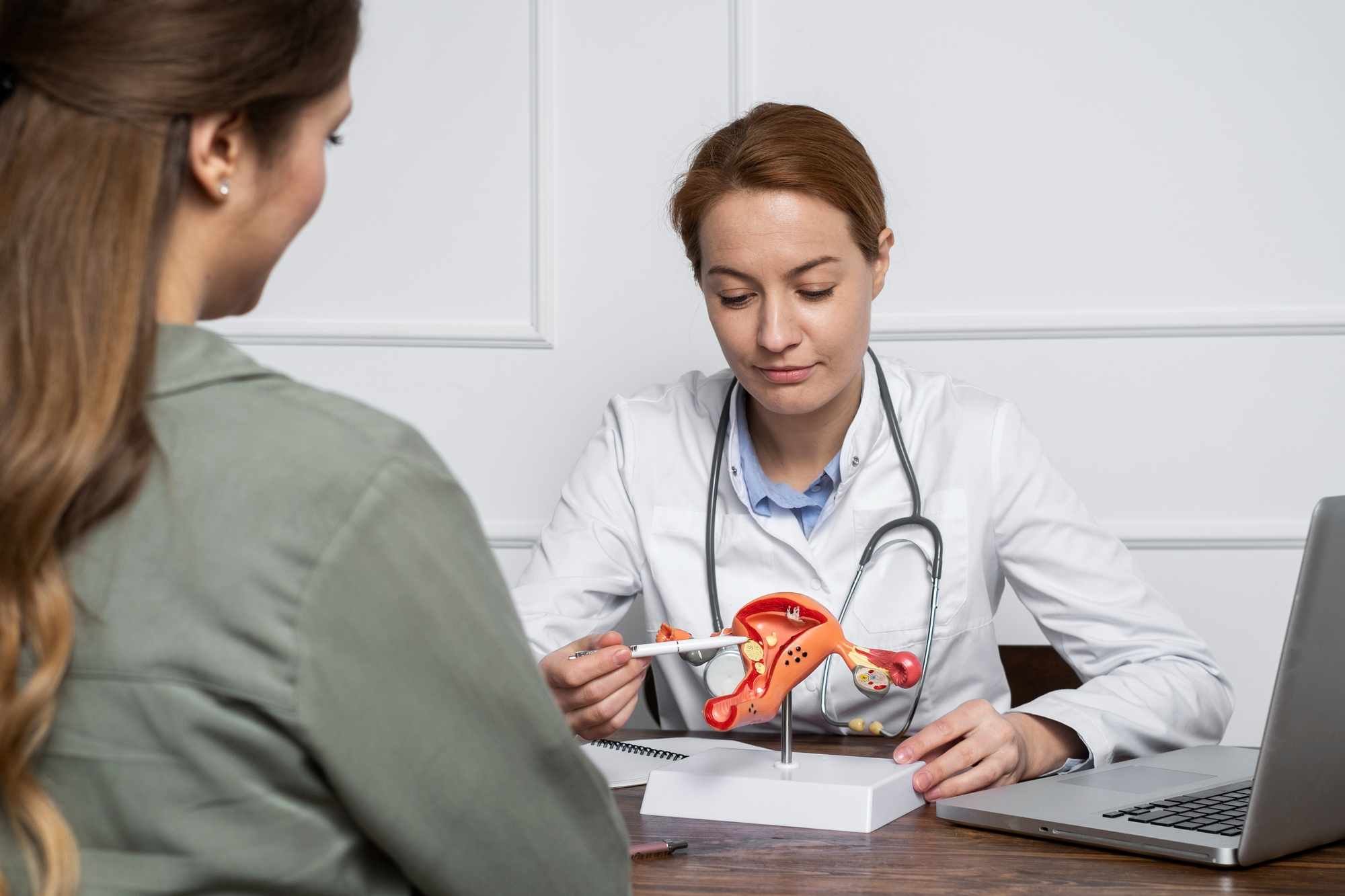
Learn about PCOS, its causes, symptoms and effective treatment options. Discover lifestyle tips to manage hormonal imbalance and improve women’s health.
28 Oct 2025
by Prakash Hospital

Fallopian tube blockage causes infertility in many women. Know the symptoms, tests, and treatment options. Visit Prakash Hospital Noida.
16 Jul 2026
by Prakash Hospital
Answers to common questions about PCOS Treatment: Laparoscopic Ovarian Drilling at Prakash Hospital, Noida.


Book a consultation with Prakash Hospital's specialists — 24/7 emergency care, 100+ doctors, NABH accredited.
View All Departments