

Thyroid Surgery (Thyroidectomy)
Removes all or part of the thyroid gland for a goitre pressing on the neck, a suspicious nodule, or an overactive thyroid that medicines can't control.

- Surgery duration
- 1.5 to 3 hours
- Anaesthesia
- General
- Hospital stay
- 1 to 3 days
- Recovery
- 2 to 3 weeks
On this page
Overview
Sometimes a relative is the first to notice that your neck looks fuller. For others it's a collar that no longer buttons, a feeling of something stuck when swallowing, or a nodule found by chance on an ultrasound done for something else. Thyroid swellings are common, especially in women, and most are harmless. Some, though, grow large enough to press on the windpipe or food pipe, make too much hormone, or need removing because a needle test can't rule out cancer.
The thyroid is a butterfly-shaped gland at the front of the neck that makes the hormones controlling your metabolism. In thyroid surgery (thyroidectomy), the surgeon removes one half of the gland (hemithyroidectomy) or all of it (total thyroidectomy) through a cut of about 4 to 6 cm in a natural skin crease low in the neck. Two things get special care during the operation: the nerves to the voice box, which run right behind the gland, and the tiny parathyroid glands, usually four, that control calcium in the blood.
Most people go home within a day or two with a normal voice and a thin scar that fades over a year. After total thyroidectomy you take a thyroid hormone tablet every day for life. Most people feel well once the dose is right, though finding it can take a few blood tests.
Thyroid surgery is among the operations our general surgery department performs regularly. Thyroid blood tests, neck ultrasound and needle biopsy are done by our diagnostic team, and our physicians manage thyroid levels before and after surgery. If the lab report on the removed gland shows cancer, the surgical team coordinates your next steps with cancer specialists.
Why it's done
The reason for surgery decides how much of the gland is removed. Your surgeon plans it after thyroid blood tests, an ultrasound and usually a needle test (FNAC) of any nodule.
- A large goitre pressing on the windpipe or food pipe, causing breathlessness, noisy breathing or trouble swallowing
- A nodule where the needle test shows cancer or can't rule it out
- A goitre growing down behind the breastbone (retrosternal goitre)
- An overactive thyroid (Graves' disease or a toxic nodule) that returns after medicines, or when the tablets cause side effects
- A visible neck swelling that bothers you, after a clear discussion of the risks
- Fluid-filled cysts that keep refilling after being drained
Is it right for you?
Usually a good fit
- Nodules or goitre with pressure symptoms, or a suspicious needle test
- An overactive thyroid brought to normal levels with medicines before surgery
- Fit for general anaesthesia, with vocal cords checked beforehand
May not be suitable
- An overactive thyroid not yet controlled with medicines, because operating then risks a dangerous thyroid storm
- Pregnancy, unless surgery can't wait, in which case the middle three months are safest
- Uncontrolled diabetes, heart disease or a chest infection, until stabilised
Types and techniques
Half or the whole gland
A hemithyroidectomy removes one lobe, often for a single nodule with an uncertain needle result. The other half usually keeps making enough hormone, though roughly 1 in 5 people later need a thyroid tablet. A total thyroidectomy removes the whole gland and is used for large goitres affecting both sides, Graves' disease and many cancers.
When cancer is known before surgery
The surgeon may also remove lymph nodes from the neck. Some people need radioactive iodine treatment afterwards, which is given at specialised centres. Most thyroid cancers grow slowly and respond very well to treatment.
Preparing for surgery
- Thyroid function tests (TSH, T3, T4), a neck ultrasound and a needle test (FNAC) of any nodule
- A vocal cord check with a small scope by an ENT doctor, so any existing voice problem is on record
- Calcium and vitamin D levels. Low vitamin D is common in India and is corrected first, since it raises the chance of low calcium after surgery. Read more on vitamin D
- If your thyroid is overactive, keep taking your antithyroid tablets exactly as prescribed. You may also be given iodine drops for about 10 days before surgery
- A CT scan of the neck and chest if the goitre extends behind the breastbone
- Blood tests, an ECG and a chest X-ray to confirm you're fit for anaesthesia, with blood thinners and diabetes medicines adjusted beforehand
- Tell us if you rely on your voice for work, as teachers and singers do, so the risks to pitch can be discussed
The procedure, step by step
- 01
Anaesthesia and positioning
You're under general anaesthesia with a breathing tube. A small pillow under your shoulders tilts your head back to bring the thyroid forward.
- 02
The incision
A cut of about 4 to 6 cm is made in a skin crease low in the neck, and the thin strap muscles over the thyroid are moved aside.
- 03
Protecting the nerves and parathyroids
The surgeon finds the nerve to the voice box on each side and keeps it in view, and identifies the parathyroid glands with their blood supply so they stay in place.
- 04
Removing the gland
The blood vessels to the thyroid are sealed, and the lobe, or the whole gland, is lifted free from the windpipe.
- 05
Closing
After a careful check for bleeding, the wound is closed with dissolvable stitches or glue, sometimes with a small drain for a day. The gland goes to the lab. Surgery takes about 1.5 to 3 hours.
Benefits and risks
Benefits
- Relieves pressure on the windpipe and food pipe
- Gives a firm diagnosis for a suspicious nodule and treats it at the same time
- A permanent cure for an overactive thyroid when the whole gland is removed
- Removes a visible neck swelling, with a scar that usually fades well
Possible risks
- Temporary hoarseness or a weak voice for days to weeks, which is fairly common
- Permanent voice change from nerve injury, in roughly 1 in 100
- Low calcium after total thyroidectomy, causing tingling in the lips and fingers. It's temporary in about 1 in 4 people and permanent in about 1 to 3 in 100
- Bleeding in the neck in the first hours, in about 1 in 100, which can press on the airway and needs an urgent return to theatre
- A thick or raised scar in people prone to keloids
Recovery timeline
- 01
Day 0 to 1
Nurses watch your voice and breathing, and a blood test checks your calcium. You can sip fluids within hours and eat soft food by the evening. Swallowing feels sore, like a bad throat.
- 02
Days 1 to 3
Most people go home after 1 or 2 nights, once calcium is stable. You may go home on calcium and vitamin D tablets, and after total thyroidectomy you start a daily thyroid hormone tablet.
- 03
Weeks 1 to 2
The neck feels stiff and your voice may tire easily. Gentle neck movements help. Most people return to desk work in 1 to 2 weeks.
- 04
Weeks 2 to 6
At follow-up, the surgeon goes over the lab report and checks your wound. A blood test about 6 weeks after surgery sets the right dose of thyroid tablet.
When to call your doctor
- Neck swelling that grows quickly, or difficulty breathing. Go to the nearest emergency department
- Tingling in the lips, fingers or toes, or muscle cramps, which can mean low calcium
- Noisy breathing, or a voice that gets worse instead of better
- Fever, or redness and discharge from the wound
- Palpitations, sweating or shakiness, which may mean your tablet dose needs adjusting
Call us on +91-8826000033 or come straight to our 24/7 emergency department.
Alternatives to surgery
Watching benign nodules
With a reassuring needle test and no symptoms, a nodule usually needs nothing more than a repeat ultrasound every year or two.
Medicines for an overactive thyroid
Antithyroid tablets such as carbimazole control an overactive gland in most people. In Graves' disease, a course of 12 to 18 months leads to lasting remission in roughly 4 to 5 in 10.
Radioactive iodine
A capsule or drink of radioactive iodine, given at specialised centres, slowly shrinks overactive thyroid tissue without surgery. It's avoided in pregnancy and breastfeeding, can worsen thyroid eye disease, and often leaves you needing a thyroid tablet anyway.
Talk to our General & Laparoscopic Surgery team
Ask about your options, the cost and your insurance before you decide. See the insurance and TPA panels we work with.
This page explains Thyroid Surgery (Thyroidectomy) in general terms. Your own plan depends on your health, your test results and your doctor's advice. Please read our medical disclaimer.
Your care team
Thyroid Surgery (Thyroidectomy) is led by our General & Laparoscopic Surgery team, with other departments stepping in at each stage of your care.
General Surgery Department
At Prakash Hospital, our General Surgery Department delivers expert surgical care for a wide range of conditions, combining advanced techniques with personalized treatment plans to ensure safe, effective, and faster recovery for our patients.
What the department treats
Laparoscopic Surgery
Hernia Repair
Gallbladder Surgery
Appendectomy
Thyroid Surgery
Wound Management
Other departments involved
ENT (Ear, Nose, and Throat)
Checks your vocal cords with a small scope before surgery, and again if your voice stays hoarse afterwards.
Visit departmentGeneral Medicine
Brings an overactive thyroid under control before surgery and adjusts your thyroid tablet dose afterwards.
Visit departmentDiagnostic
Does your thyroid blood tests, neck ultrasound and needle biopsy, and examines the removed gland.
Visit departmentRelated procedures
Procedures often considered alongside Thyroid Surgery (Thyroidectomy), or that treat related conditions.
Microlaryngoscopy
Examines the vocal cords under a microscope to remove growths or take a biopsy, working through the mouth.
Learn moreBreast Lump Removal
Removes a breast lump after tests, usually as day care, and sends it to the lab to confirm what it is.
Learn moreGastroenterologyUpper GI Endoscopy
A camera test of the food pipe, stomach and duodenum for acidity, ulcers, bleeding and swallowing problems.
Learn moreMore in General & Laparoscopic Surgery
Other procedures our General & Laparoscopic Surgery team performs.
Laparoscopic Appendectomy
Removes an inflamed appendix through three small cuts, usually with one or two nights in hospital.
Learn moreLaparoscopic Cholecystectomy
Removes a gallbladder with stones through four small cuts, usually with a stay of one night or less.
Learn moreHernia Repair (Laparoscopic)
Pushes the bulge back and reinforces the weak abdominal wall with mesh, by keyhole or open surgery.
Learn moreHaemorrhoidectomy
Removes large or prolapsing piles that haven't settled with diet, medicines or banding.
Learn moreWound Care & Debridement
Treats wounds that won't heal, from diabetic foot ulcers to bedsores, with debridement, dressings and pressure relief.
Learn moreRelated articles
Guides from our doctors on Thyroid Surgery (Thyroidectomy) and the conditions it treats.
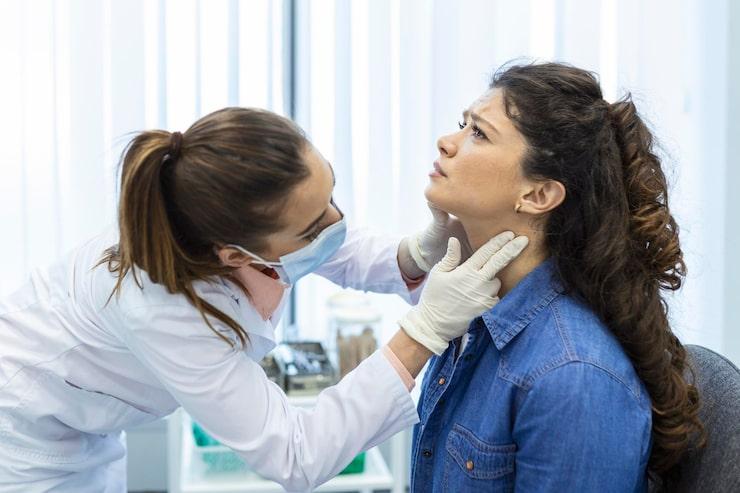
Thyroidectomy and Its Recovery: What You Need to Know
Learn all you need to know before a thyroidectomy with the helpful insight of the experts at Prakash Hospital, Noida.
20 Aug 2025
by Prakash Hospital

Thyroid Disorders: Symptoms, Tests, and Treatment
Thyroid disorders affect millions in India. Know hypothyroidism, hyperthyroidism symptoms, tests, and treatment. Visit Prakash Hospital Noida.
8 Jul 2026
by Prakash Hospital

Female Thyroid Problems: Early Symptoms Every Woman Should Know
Learn the early symptoms of thyroid problems in women, common causes, and when to seek medical advice for timely diagnosis and treatment.
13 May 2026
by Prakash Hospital

Best Foods for Thyroid Health: What to Eat and What to Avoid
Discover the best foods for thyroid health and learn which foods to avoid to support balanced thyroid function and overall well-being.
21 Apr 2026
by Prakash Hospital

Hidden Dangers of Silent Hypothyroidism: How Low Thyroid Levels Affect Your Body and Mind
Learn symptoms and risks of silent hypothyroidism and how Prakash Hospital offers expert diagnosis and care.
3 Nov 2025
by Prakash Hospital

Living with thyroid problems: Tips for making life easier every day
Discover practical lifestyle tips to help manage thyroid problems and improve daily well-being with guidance from Prakash Hospital.
15 Aug 2025
by Prakash Hospital
Frequently Asked Questions
Answers to common questions about Thyroid Surgery (Thyroidectomy) at Prakash Hospital, Noida.
Will my voice change after thyroid surgery?
Will I have to take tablets for life?
Can I get pregnant after thyroid surgery?
Will the scar show?
Is there a special diet after thyroid surgery?
Does a thyroid nodule mean cancer?


Looking for the Best Hospital in Noida? Talk to Our Experts
Book a consultation with Prakash Hospital's specialists — 24/7 emergency care, 100+ doctors, NABH accredited.

Prakash Hospital Pvt. Ltd. is a 100 bedded NABH NABL accredited multispecialty hospital along with a center of trauma and orthopedics. We are in the service of society since 2001.
OUR SPECIALITIES
Patient Services
PROCEDURES
Contact Us
D – 12A, 12B, Sector-33, G. B. Nagar, Noida, Uttar Pradesh 201301
+91-8826000033


© 2026 All rights reserved.
Designed and Developed by Zarle Infotech


