


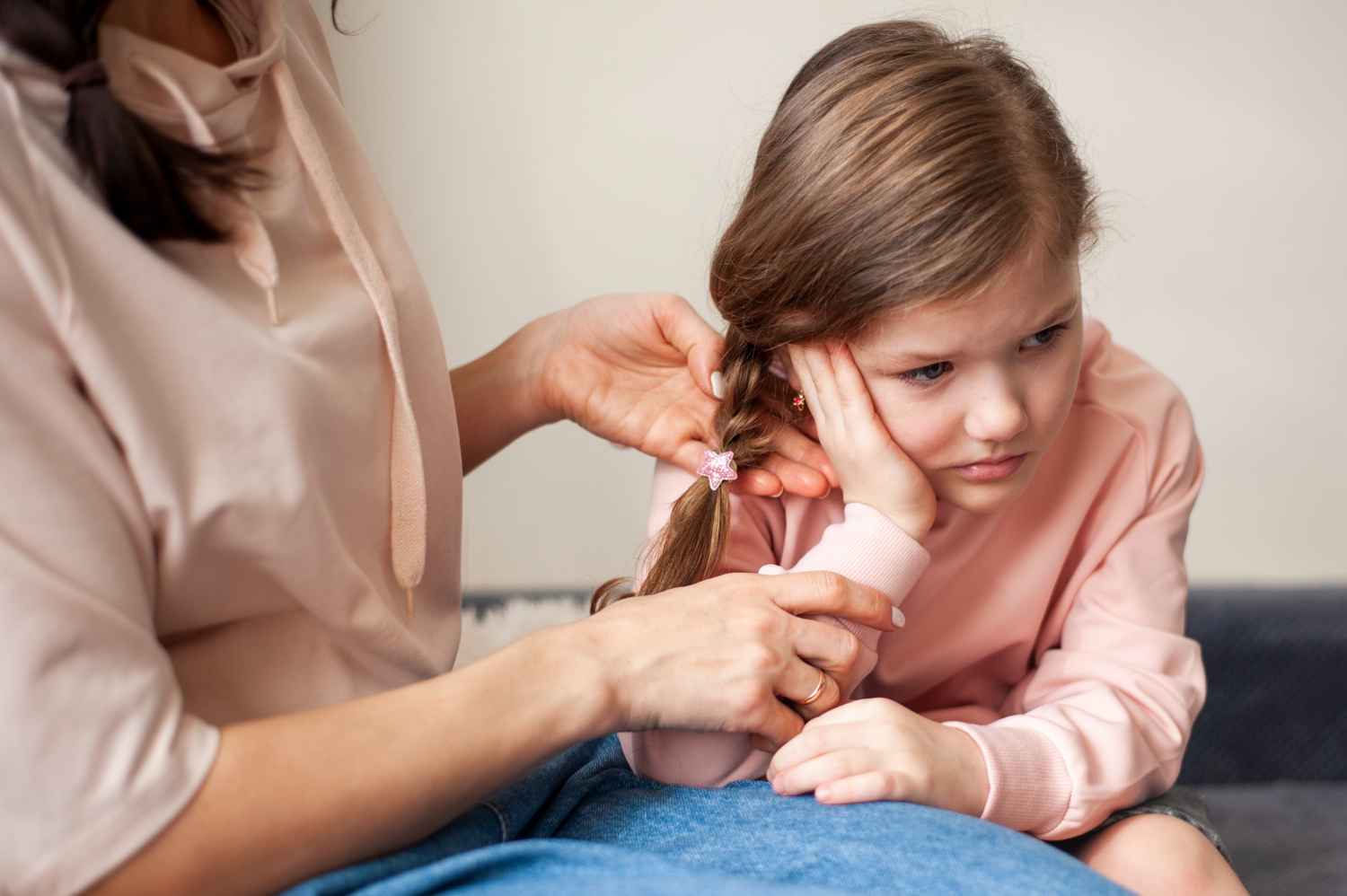
What Triggers Ear Infections (Otitis Media) and How to Treat Them
Learn what triggers ear infections, how to spot symptoms early, and which treatments work best for both children and adults.
4 May 2025
by Prakash Hospital
Repairs a hole in the eardrum with a graft of your own tissue, to stop repeated ear discharge and, in many cases, improve your hearing.

Every time water gets into that ear, it starts discharging again. You've had drops, antibiotics, and advice to plug the ear with cotton when you bathe, and the hearing on that side has slowly become duller. A long-standing hole in the eardrum, often left behind by ear infections in childhood, is a common cause.
The eardrum (tympanic membrane) is a thin, skin-like membrane that seals the middle ear and passes sound vibrations to three tiny bones called the ossicles. Tympanoplasty repairs a hole in it. Working under a microscope or through an endoscope, the surgeon places a graft beneath the hole, usually a thin sheet of tissue from the covering of the muscle above your ear (temporalis fascia) or a sliver of cartilage. Over the following weeks, your own eardrum grows across the graft and seals the gap. If the ossicles are damaged, they can be repaired in the same operation.
The graft takes successfully in roughly 85 to 95 out of 100 operations. A sealed eardrum keeps water and germs out, so the discharge usually stops. Hearing often improves too, but not always, and how much depends on the ossicles and the inner ear.
In our ENT department, eardrum perforations that won't heal on their own are repaired with tympanoplasty. Before surgery, we examine the ear under a microscope and test your hearing with pure tone and impedance audiometry, so you know what to expect. If the examination shows cholesteatoma (a skin cyst growing inside the middle ear), a different and larger operation is needed, and we'll explain what it involves.
Most small holes from a recent injury or infection heal by themselves within a couple of months, so surgery isn't done straight away. Tympanoplasty is advised when a perforation hasn't healed after about 3 months, or when damage in the middle ear affects your hearing.
Small, easily seen holes can be repaired entirely through the ear canal. Larger holes, or those at the front of the eardrum, often need a cut in the crease behind the ear, which heals into a thin, hidden scar.
Most tympanoplasties are done under an operating microscope. Some surgeons use a thin endoscope passed down the ear canal, which can avoid the cut behind the ear for suitable holes.
Temporalis fascia is the most common graft. Cartilage is stiffer, and is preferred for repeat operations, very large holes and ears that tend to retract.
If the chain of tiny bones is broken or worn, it can be rebuilt with your own bone or cartilage, or with a small prosthesis, during the same operation. This is called ossiculoplasty.
Most people have a general anaesthetic. Some adults have local anaesthetic with sedation instead, staying awake but relaxed.
The surgeon works down the ear canal, or through a cut behind the ear that lets the ear fold forward. A small piece of fascia is taken from under the skin above the ear at the same time.
The edges of the perforation are freshened so they can grow, and the middle ear is checked for infection, scar tissue and the condition of the ossicles.
The graft is tucked under the remaining eardrum and supported with small dissolving sponges. Any repair of the ossicles is done at this stage.
The eardrum is laid back over the graft, the canal is packed with a medicated dressing, and any cut behind the ear is stitched. A head bandage goes on overnight.
The graft is fragile for the first few weeks, so two rules come first: keep the ear dry, and avoid sudden pressure in it.
The head bandage stays on overnight. Mild dizziness and a full, blocked feeling in the ear are normal. Most people go home the same day or the next morning.
Keep the ear dry with a petroleum jelly cotton ball whenever you bathe, and have someone help you wash your hair. Blow your nose gently, one side at a time, and sneeze with your mouth open. Stitches behind the ear come out at about a week, and most people are back at office work within 1 to 2 weeks.
The dressing in the ear canal is cleaned out at the clinic, usually at 2 to 3 weeks, and hearing stays muffled until then. Avoid flying, heavy lifting and straining, because pressure changes can lift the graft.
Your surgeon checks the graft under the microscope. A repeat hearing test at around 2 to 3 months shows how much your hearing has changed. Ask before you start swimming again.
Call us on +91-8826000033 or come straight to our 24/7 emergency department.
Fresh holes from an injury or infection often close on their own within 6 to 8 weeks, as long as the ear is kept dry.
Some people with small, dry holes and good hearing choose to live with them, using ear plugs when they bathe and drops for occasional discharge.
If hearing is the main concern and surgery is risky, a hearing aid is an option, although an ear that keeps discharging can make the ear mould hard to wear.
Talk to our ENT team
Ask about your options, the cost and your insurance before you decide. See the insurance and TPA panels we work with.
This page explains Tympanoplasty (Eardrum Repair Surgery) in general terms. Your own plan depends on your health, your test results and your doctor's advice. Please read our medical disclaimer.
Tympanoplasty (Eardrum Repair Surgery) is led by our ENT team, with other departments stepping in at each stage of your care.
At Prakash Hospital, our ENT Department offers expert diagnosis and advanced treatments for ear, nose, throat, head, and neck conditions, ensuring better health and quality of life for all ages.
What the department treats
Sinus Surgery (FESS)
Tympanoplasty
Septoplasty
Tonsillectomy
Hearing Aid Fitting
Allergy Management
Procedures often considered alongside Tympanoplasty (Eardrum Repair Surgery), or that treat related conditions.
Hearing tests, scans and counselling to decide whether a cochlear implant can help where hearing aids no longer do.
Removes enlarged adenoids that block a child's nose, disturb sleep or keep causing ear infections.
Straightens the bent wall inside the nose to relieve a constantly blocked nostril, with no cut outside.
Endoscopic surgery through the nose that clears blocked sinuses and polyps when medicines stop working.
Removes tonsils that cause repeated throat infections or block a child's breathing during sleep.
Other procedures our ENT team performs.
We offer expert care across key specialties, including Medicine, Cardiology, Orthopaedics, ENT, Gynaecology, and more—delivering trusted treatment under one roof.
Free tools to check your weight, plan a pregnancy, track calories and more.
Learn what triggers ear infections, how to spot symptoms early, and which treatments work best for both children and adults.
4 May 2025
by Prakash Hospital
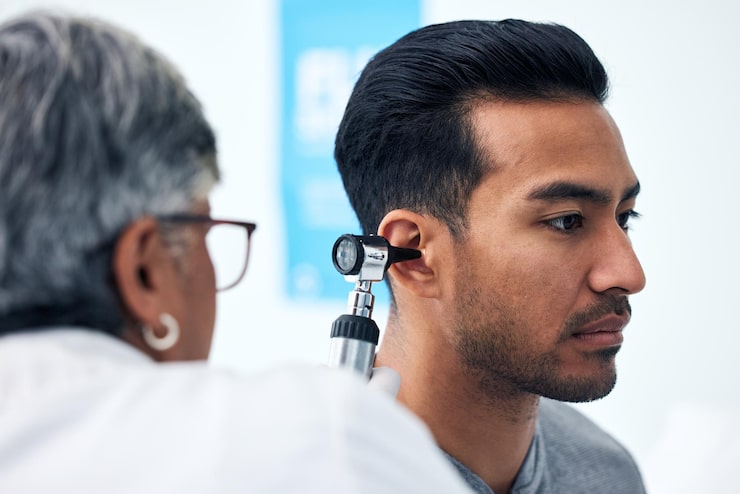
Learn everything about Cochlear implants through this helpful guide with the advice of seasoned experts from Prakash Hospital, Noida.
25 Aug 2025
by Prakash Hospital

Discover the common causes of lumps behind the ear and how to identify when it's time to seek medical care. Learn about treatment options and diagnostic steps.
10 May 2025
by Prakash Hospital

Discover safe lifting techniques, common mistakes, spine injury prevention tips and expert back care at Prakash Hospital Noida.
23 Mar 2026
by Prakash Hospital

Learn essential ergonomic tips for desk workers to prevent back pain, neck strain, wrist injuries, and posture-related problems.
10 Mar 2026
by Prakash Hospital

Learn about stress fractures, including causes, symptoms, treatment options, and recovery tips for faster healing and injury prevention.
18 May 2026
by Prakash Hospital

Sore throat treatment, home remedies that work, and warning signs that mean you need medical care. Visit Prakash Hospital Noida for consultation.
25 Jun 2026
by Prakash Hospital
Learn all you need to before getting nose surgery with special insight from doctors at Prakash Hospital, Noida.
19 Aug 2025
by Prakash Hospital
Answers to common questions about Tympanoplasty (Eardrum Repair Surgery) at Prakash Hospital, Noida.


Book a consultation with Prakash Hospital's specialists — 24/7 emergency care, 100+ doctors, NABH accredited.
View All Departments