


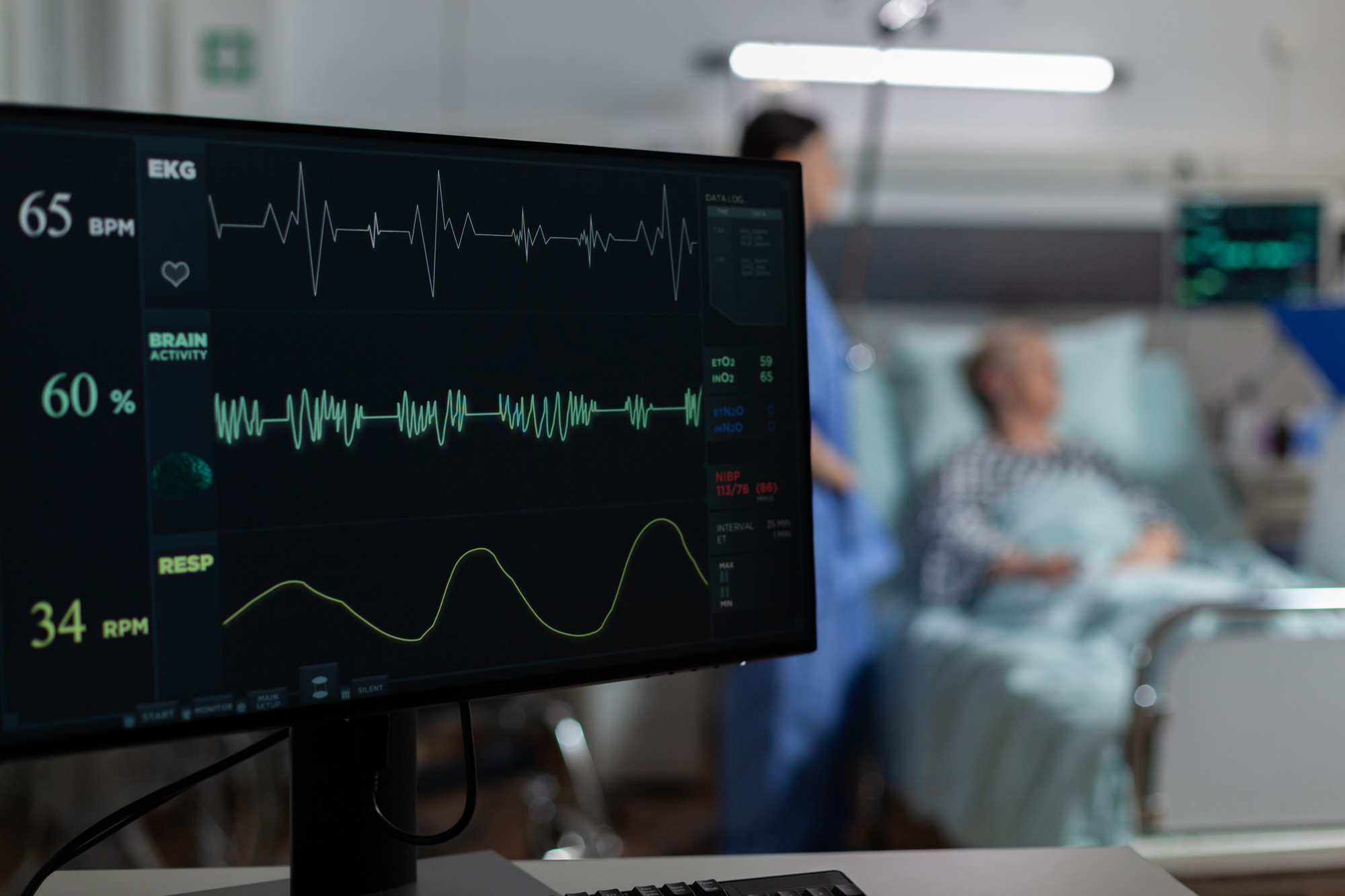
Understanding Arrhythmia
Learn what arrhythmia is, why it happens, warning signs, risk factors, complications, and treatment options. A complete guide by Prakash Hospital for better heart health.
12 Dec 2025
by Prakash Hospital
A small device under the skin stops your heartbeat from dropping too low, so the blackouts and dizzy spells of a slow heart can stop.

The pulse counted at your check-up was 38. That explained the dizziness every time you stood up, and the evening you blacked out in the bathroom. When the heart's electrical system slows down or stalls, the brain and muscles don't get enough blood.
A pacemaker is a battery-powered device about the size of a matchbox, placed under the skin below the collarbone. One or two thin wires (leads) run from it through a vein into the right side of the heart. It watches every beat, and if your heart rate drops too low or pauses, it sends a tiny pulse that you won't feel. When your own rhythm is fine, it simply waits.
If a slow heart is causing your symptoms, a pacemaker usually stops the blackouts and brings your energy back within days. It doesn't clear blocked arteries or strengthen a weak heart muscle. The battery lasts about 7 to 12 years, and then the device is swapped in a shorter procedure, usually keeping the same leads.
Our cardiology department finds the cause of a slow heartbeat with ECG, Holter monitoring and echocardiography, and coordinates pacemaker implantation with experienced cardiac surgeons. Your cardiologist explains the procedure and long-term plan beforehand and stays involved in your follow-up.
A pacemaker is advised when a slow or interrupted rhythm causes symptoms or risks sudden collapse, once reversible causes such as medicines or an underactive thyroid have been ruled out.
A single lead in the right ventricle suits people with permanent atrial fibrillation. A dual-chamber device adds a lead in the right atrium so the chambers beat in their natural order, and most people with heart block or sick sinus syndrome get one.
In some kinds of heart failure the lower chambers beat out of step. A third lead on the left side lets the device pace both together, which can ease breathlessness.
A capsule about 2.5 cm long is placed inside the heart through a vein in the groin, with no leads or chest pocket. It suits some people who need single-chamber pacing and is available only in some centres.
You're given an antibiotic and a mild sedative. The chest is cleaned and covered with sterile sheets, and the skin below the collarbone is numbed.
A cut of about 5 cm is made below the collarbone, and a small pocket is shaped under the skin to hold the device.
Each lead is passed into a vein and guided into the heart on live X-ray, then fixed to the inner wall. The doctor checks that it senses and paces reliably, and you might notice a brief flutter.
The leads are attached to the pacemaker, which is tucked into the pocket, and the wound is closed with dissolving stitches or skin glue.
A chest X-ray confirms the lead positions and rules out a collapsed lung. Before you go home, the settings are checked with a programmer held over the skin.
The leads need a few weeks to settle into the heart wall, and most of the early rules are there to protect them.
You rest with the arm on the pacemaker side kept still, sometimes in a sling. Simple painkillers ease the soreness, and most people go home the next day.
Keep the dressing dry for 5 to 7 days and have the wound checked at 7 to 10 days. Don't raise that arm above shoulder height or lift anything heavy with it.
Most people are back at desk work within 1 to 2 weeks. Driving is often allowed after about a week if you've had no blackouts, but check with your cardiologist. Ask before riding a two-wheeler too, since many cardiologists suggest waiting until the arm restrictions end.
You can return to full arm movement, yoga, swimming and most sports, while avoiding hard knocks to the device. Device checks follow at about 6 weeks and then every 6 to 12 months.
Call us on +91-8826000033 or come straight to our 24/7 emergency department.
If a beta-blocker, digoxin or even beta-blocker eye drops are slowing your heart, changing the medicine may be enough. Thyroid problems and high potassium can also slow the heart until they're treated.
A slow pulse without symptoms, or mild first-degree heart block, often needs nothing more than a repeat ECG or Holter recording from time to time.
If the main danger is a fast, life-threatening rhythm, a defibrillator may be advised instead. It can pace too, but it can also deliver a shock to stop that rhythm.
Talk to our Cardiology team
Ask about your options, the cost and your insurance before you decide. See the insurance and TPA panels we work with.
This page explains Pacemaker Implantation in general terms. Your own plan depends on your health, your test results and your doctor's advice. Please read our medical disclaimer.
Pacemaker Implantation is led by our Cardiology team, with other departments stepping in at each stage of your care.
At Prakash Hospital, our Cardiology Department offers expert, round-the-clock care, providing timely diagnosis and advanced treatments for heart conditions to keep your heart healthy and strong.
What the department treats
Interventional Cardiology
Echocardiography
Cardiac Rehabilitation
Pacemaker Implantation
Angioplasty and Stenting
Heart Failure Management
Stabilises you if you arrive after a blackout or with a dangerously slow pulse, and calls in the cardiology team.
Runs your blood tests and the chest X-ray that checks the lead positions afterwards.
Treats thyroid problems, diabetes and other conditions that affect your heart rhythm and wound healing.
Procedures often considered alongside Pacemaker Implantation, or that treat related conditions.
A portable ECG worn for 24 to 48 hours to catch irregular heartbeats that come and go.
An ultrasound of the heart that shows how well it pumps and how the valves work. Painless and radiation-free.
An ECG recorded while you walk on a treadmill, to check for reduced blood flow to the heart during exercise.
An X-ray dye test that maps blockages in the heart's arteries and guides the choice between medicines, stents and surgery.
Measures pressure and oxygen inside the heart and lungs through a thin tube, to guide valve and heart failure care.
Other procedures our Cardiology team performs.
We offer expert care across key specialties, including Medicine, Cardiology, Orthopaedics, ENT, Gynaecology, and more—delivering trusted treatment under one roof.
Free tools to check your weight, plan a pregnancy, track calories and more.
Learn what arrhythmia is, why it happens, warning signs, risk factors, complications, and treatment options. A complete guide by Prakash Hospital for better heart health.
12 Dec 2025
by Prakash Hospital

जानिए अचानक बेहोशी (फेंटिंग) के मुख्य कारण, इसके लक्षण और कब डॉक्टर से संपर्क करना चाहिए। सही देखभाल और बचाव के आसान उपाय भी समझें।
13 May 2026
by Prakash Hospital

Understand the critical difference between a heart attack and cardiac arrest, their symptoms, causes, emergency response steps, and treatment options. Learn when to seek urgent help from expert cardiologists at Prakash Hospital.
8 Dec 2025
by Prakash Hospital

एसिडिटी और गैस क्यों होती है, इसके लक्षण क्या हैं और इससे राहत पाने के घरेलू व मेडिकल उपाय हिंदी में जानें।
21 Jan 2026
by Prakash Hospital

IBS symptoms, causes, triggers, and management. What is irritable bowel syndrome and how to live with it. Prakash Hospital Noida.
15 Sept 2026
by Prakash Hospital

How to get rid of gas and bloating fast — practical Indian remedies, dietary changes, and when to see a doctor. Prakash Hospital Noida.
16 Sept 2026
by Prakash Hospital

सीने में जलन (एसिडिटी) और हार्ट प्रॉब्लम के लक्षणों में क्या फर्क है? कब यह गंभीर हो सकता है और डॉक्टर से कब मिलना चाहिए, पूरी जानकारी हिंदी में।
23 Apr 2026
by Prakash Hospital

Discover how sleep apnoea silently harms your heart and brain. Learn its symptoms, risks, and treatment options at Prakash Hospitals.
3 Nov 2025
by Prakash Hospital
Learn live saving tips when faced with an heart attack with advice from experts from Prakash Hospital.
1 Oct 2025
by Prakash Hospital
Answers to common questions about Pacemaker Implantation at Prakash Hospital, Noida.


Book a consultation with Prakash Hospital's specialists — 24/7 emergency care, 100+ doctors, NABH accredited.
View All Departments