


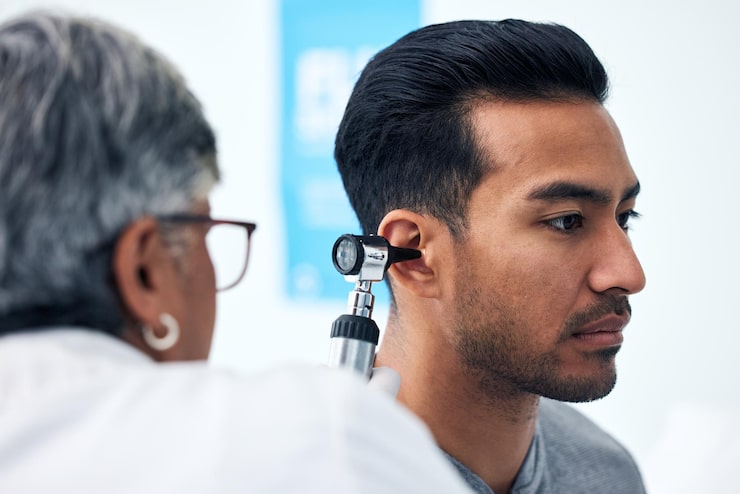
Cochlear Implants and Their Installation: A Life-Changing Solution for Hearing Loss
Learn everything about Cochlear implants through this helpful guide with the advice of seasoned experts from Prakash Hospital, Noida.
25 Aug 2025
by Prakash Hospital
Hearing tests, scans and talks with the team that show whether a cochlear implant would help you or your child hear more than hearing aids can.

Your hearing aids used to help. Now you turn them up and still catch only half of what's said, especially when the whole family is talking at once. Or your baby didn't pass the newborn hearing screen and doesn't turn towards your voice. When hearing loss is severe to profound, even powerful hearing aids may not make speech clear enough to follow.
A hearing aid makes sound louder. A cochlear implant bypasses the damaged hair cells of the inner ear (the cochlea) and stimulates the hearing nerve directly with tiny electrical signals. It has two parts: a receiver with a thin electrode, placed inside the cochlea during surgery, and a sound processor worn behind the ear. Cochlear implant evaluation is the set of tests that decides whether you're likely to benefit and whether surgery is safe for you.
An implant doesn't restore normal hearing, and the benefit builds over months of listening practice. Most adults who lost their hearing after learning to speak understand speech far better than they did with hearing aids, and many can use the phone. Children born deaf do much better when implanted early, ideally around their first birthday, because the brain picks up language most easily in the first years.
Our ENT department carries out full audiological assessments, including pure tone and impedance audiometry, and guides you to the right solution: medical treatment, hearing aids, or surgery such as a cochlear implant. If an implant is the answer, we'll explain the surgery, programming and rehabilitation that follow, and where each takes place.
Evaluation is offered when hearing loss in both ears is severe enough that well-fitted hearing aids no longer give useful speech understanding. The exact criteria vary with age and between implant programmes.
Your ENT specialist asks when and how the hearing loss started, about family history and illnesses such as meningitis, and examines your ears under the microscope.
Pure tone audiometry finds the softest sounds you can hear at each pitch, and impedance audiometry checks the eardrum and middle ear. Speech tests, done with your hearing aids on, measure how many words and sentences you understand.
Otoacoustic emissions (OAE) and brainstem response tests (ABR or BERA) use small sensors to measure how the ear and hearing nerve respond to sound, so the child doesn't have to answer. Most children sleep through them.
A CT scan of the inner ear and an MRI of the hearing nerve are usually done on a separate day. Young children often need sedation to lie still for the MRI.
Your fitness for anaesthesia is checked, along with vaccinations that protect against meningitis. For children, a speech therapist and a paediatrician assess language and development.
The results are reviewed together. You and your family then talk through whether an implant is recommended, for which ear, what it can and can't do, and the months of therapy it needs.
Implant candidates usually have severe to profound loss, which means even raised voices aren't heard clearly without aids. The speech scores matter just as much. If you still understand only a small share of words with well-fitted hearing aids, an implant is likely to do better.
The scans show whether the cochlea is normally formed and open, and whether the hearing nerve is present. A missing nerve or a completely blocked cochlea may rule an implant out, or point to other devices offered at specialised centres.
The team will then usually say one of three things. An implant is likely to help and surgery is recommended. You'd do as well for now with better-fitted or more powerful hearing aids, with regular retesting. Or an implant isn't suitable, and the alternatives are explained.
If an implant is recommended, the evaluation is the first step of a longer process.
Under general anaesthesia, the surgeon makes a cut behind the ear, drills a small path through the bone to the middle ear, and slides the electrode into the cochlea. The receiver sits under the skin. Surgery usually takes 2 to 3 hours, with 1 to 2 nights in hospital, and most adults are back at desk work within 1 to 2 weeks.
About 2 to 4 weeks after surgery, an audiologist fits the processor and turns it on. Sounds often seem mechanical at first. Programming sessions (mapping) over the next months fine-tune the settings.
Progress depends on daily listening practice, auditory therapy and regular mapping. Many adults notice real gains within 3 to 6 months. Children need years of therapy and family involvement to develop spoken language.
Call us on +91-8826000033 or come straight to our 24/7 emergency department.
Modern digital hearing aids, properly fitted and tuned, help many people with severe hearing loss. They're always tried first.
Some adults and families prefer sign language, lip-reading, captions and vibrating alerts, with or without an implant. That's a valid choice.
Talk to our ENT team
Ask about your options, the cost and your insurance before you decide. See the insurance and TPA panels we work with.
This page explains Cochlear Implant Evaluation in general terms. Your own plan depends on your health, your test results and your doctor's advice. Please read our medical disclaimer.
Cochlear Implant Evaluation is led by our ENT team, with other departments stepping in at each stage of your care.
At Prakash Hospital, our ENT Department offers expert diagnosis and advanced treatments for ear, nose, throat, head, and neck conditions, ensuring better health and quality of life for all ages.
What the department treats
Sinus Surgery (FESS)
Tympanoplasty
Septoplasty
Tonsillectomy
Hearing Aid Fitting
Allergy Management
Procedures often considered alongside Cochlear Implant Evaluation, or that treat related conditions.
Closes a hole in the eardrum with your own tissue to stop ear discharge and protect or improve hearing.
Removes enlarged adenoids that block a child's nose, disturb sleep or keep causing ear infections.
Examines the vocal cords under a microscope to remove growths or take a biopsy, working through the mouth.
Endoscopic surgery through the nose that clears blocked sinuses and polyps when medicines stop working.
We offer expert care across key specialties, including Medicine, Cardiology, Orthopaedics, ENT, Gynaecology, and more—delivering trusted treatment under one roof.
Free tools to check your weight, plan a pregnancy, track calories and more.
Learn everything about Cochlear implants through this helpful guide with the advice of seasoned experts from Prakash Hospital, Noida.
25 Aug 2025
by Prakash Hospital

Discover the common causes of lumps behind the ear and how to identify when it's time to seek medical care. Learn about treatment options and diagnostic steps.
10 May 2025
by Prakash Hospital

Learn what triggers ear infections, how to spot symptoms early, and which treatments work best for both children and adults.
4 May 2025
by Prakash Hospital

Discover effective natural remedies for period pain relief, including lifestyle tips, home treatments, and ways to ease menstrual cramps safely.
28 Apr 2026
by Prakash Hospital

Heavy periods can affect quality of life and cause anemia. Know the causes, treatments, and when to see a doctor. Visit Prakash Hospital Noida.
8 Jul 2026
by Prakash Hospital

Low AMH and ovarian reserve — what the test means, what affects it, and how to improve fertility outcomes. Prakash Hospital Noida.
31 Jul 2026
by Prakash Hospital
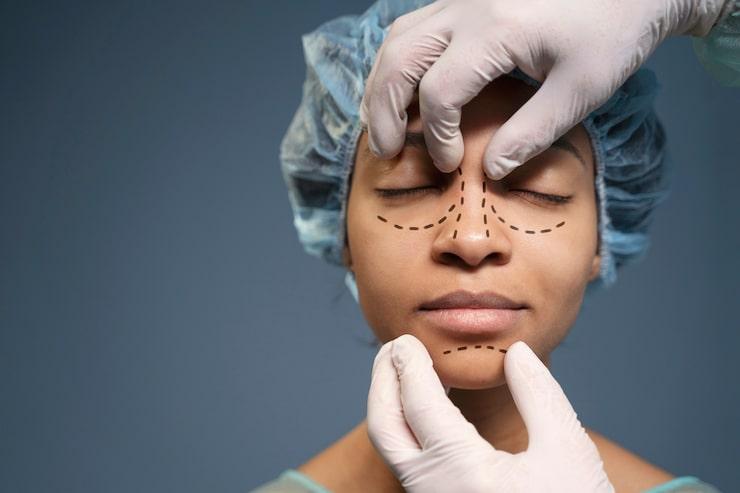
Learn all you need to before getting nose surgery with special insight from doctors at Prakash Hospital, Noida.
19 Aug 2025
by Prakash Hospital

Sore throat treatment, home remedies that work, and warning signs that mean you need medical care. Visit Prakash Hospital Noida for consultation.
25 Jun 2026
by Prakash Hospital
Answers to common questions about Cochlear Implant Evaluation at Prakash Hospital, Noida.


Book a consultation with Prakash Hospital's specialists — 24/7 emergency care, 100+ doctors, NABH accredited.
View All Departments