

EEG (Electroencephalogram)
A painless recording of your brain's electrical activity that helps your neurologist make sense of seizures and blackouts.

- Test duration
- About 1 hour, including set-up
- Anaesthesia
- None needed
- Hospital stay
- None for a routine EEG
- Results
- Usually within a few days
On this page
Overview
Your son was watching TV when his eyes rolled up and his arms began to jerk. It lasted a minute, and afterwards he was confused and sleepy. After an event like this, the neurologist wants to know what the brain was doing, and an EEG is often the first test.
An EEG (electroencephalogram) records the tiny electrical signals brain cells use to communicate, through about 20 small electrodes on your scalp. Nothing is sent into your brain. The EEG only listens.
It supports a diagnosis rather than making one. It can show patterns typical of epilepsy and help identify the type, which guides the choice of medicine. But between seizures a routine EEG is normal in many people who do have epilepsy, so your neurologist reads it alongside what happened and usually an MRI.
Our neurology department offers EEG for seizure evaluation, along with long-term epilepsy care.
Why the test is done
- A first seizure, or episodes of jerking, stiffening or falling that might be seizures
- Staring spells in children, which can be absence seizures
- Working out the type of epilepsy, to choose the right medicine
- Unexplained blackouts, when it isn't clear whether they were faints
- Confusion or drowsiness in hospital, to look for hidden seizures or brain inflammation (encephalitis)
- Deciding whether epilepsy medicines can be reduced after a long seizure-free spell
Types of test
Routine EEG
About 20 to 40 minutes of recording while you're awake. It's the standard first test.
Sleep-deprived EEG
You sleep less the night before so you doze during the test, since abnormal patterns often appear in sleep.
Longer recordings
An ambulatory EEG records at home for 1 to 3 days. Video EEG in hospital films your events while recording, and is usually arranged when routine tests haven't settled the diagnosis or before epilepsy surgery.
Preparing for the test
- Wash your hair the night before or that morning with shampoo only. No coconut oil, hair oil, gel or conditioner
- Undo tight plaits and remove hair extensions
- Keep taking your epilepsy medicines unless your neurologist says otherwise, and eat normally
- For a sleep-deprived EEG, follow the sleep instructions and don't drive yourself there
- Bring a phone video of the episodes if anyone has recorded one. It's often the most useful thing your neurologist sees
- For a young child, bring a feed and a favourite toy
What happens during the test
- 01
Placing the electrodes
The technician measures your head and fixes about 20 electrodes with paste, or fits a cap. It takes 15 to 20 minutes and doesn't hurt.
- 02
Recording at rest
You lie back with your eyes closed and keep still, opening them when asked.
- 03
Deep breathing and flashing lights
You breathe deeply for about 3 minutes, then watch a flashing light. Both can bring out seizure patterns in some types of epilepsy.
- 04
Finishing
Dozing off is welcome, since some patterns show only in sleep. Afterwards the electrodes come off and the paste washes out at home.
Understanding your results
A neurologist reads the recording and reports, usually within a few days. Slowing in one area can point to a problem there, such as an old injury, stroke or infection. Slowing everywhere is common after a seizure and with some medicines. Epileptiform discharges (sharp spikes or waves) support a diagnosis of epilepsy, and where they appear suggests whether seizures start in one area (focal) or across the whole brain (generalised).
A normal EEG doesn't rule out epilepsy. A single routine EEG picks up these changes in only about a third to a half of people with epilepsy, and repeating it or recording sleep raises the chance. Your neurologist will combine the result with your history, and usually an MRI, before deciding on treatment.
Benefits and risks
Benefits
- Painless, with no needles or radiation, so it's safe for babies, children and pregnant women
- Helps confirm epilepsy and its type, which affects the choice of medicine
- Can show hidden seizure activity in someone who is confused or drowsy
Possible risks
- Light-headedness or tingling fingers from deep breathing, which passes in minutes
- Occasionally, the lights or deep breathing trigger a seizure in someone with epilepsy. Staff are trained to manage it
- Mild scalp redness or itching from the paste
- Tiredness and a higher seizure risk after a sleep-deprived EEG
After the test
- 01
Straight after
After a routine EEG you can eat and go back to work, and shampoo out the leftover paste at home. After a sleep-deprived or sedated EEG, have someone take you home and don't drive or swim that day.
- 02
Your report
Go through it with your neurologist. If you've had seizures, don't drive or ride a two-wheeler until your neurologist says it's safe, whatever the EEG shows.
When to call your doctor
- A seizure lasting more than 5 minutes, or repeated seizures without waking in between. Call an ambulance
- A seizure with a head injury, or in water
- Confusion that doesn't clear within an hour or so
- A seizure with fever, severe headache or neck stiffness
- A first seizure during pregnancy
Call us on +91-8826000033 or come straight to our 24/7 emergency department.
Other tests
MRI brain
Shows the brain's structure and can find a scar or tumour that causes seizures. It complements an EEG rather than replacing it.
Heart tests for blackouts
Many blackouts are faints from a drop in blood pressure or a heart rhythm problem, so an ECG or Holter monitoring may be the right test instead.
Talk to our Neurosciences / Neurology team
Ask about your options, the cost and your insurance before you decide. See the insurance and TPA panels we work with.
This page explains EEG (Electroencephalogram) in general terms. Your own plan depends on your health, your test results and your doctor's advice. Please read our medical disclaimer.
Your care team
EEG (Electroencephalogram) is led by our Neurosciences / Neurology team, with other departments stepping in at each stage of your care.
Neurology Department
At Prakash Hospital, our Neurology Department provides expert care for brain and nervous system disorders, offering accurate diagnoses and effective treatments to improve your neurological health.
What the department treats
Stroke Management
Epilepsy Care
Movement Disorder Treatment
Headache and Migraine Clinic
Nerve Conduction Studies
Dementia Care
Other departments involved
Related procedures
Procedures often considered alongside EEG (Electroencephalogram), or that treat related conditions.
EMG / Nerve Conduction
Nerve and muscle tests that find the cause of numbness and weakness, such as neuropathy or carpal tunnel.
Learn moreLumbar Puncture
Collects spinal fluid from the lower back to diagnose meningitis, bleeding around the brain and nerve inflammation.
Learn moreCardiologyHolter Monitoring
A portable ECG worn for 24 to 48 hours to catch irregular heartbeats that come and go.
Learn moreStroke Management
Round-the-clock emergency scans and treatment for stroke, followed by rehabilitation and prevention.
Learn moreMore in Neurosciences / Neurology
Other procedures our Neurosciences / Neurology team performs.
Related articles
Guides from our doctors on EEG (Electroencephalogram) and the conditions it treats.
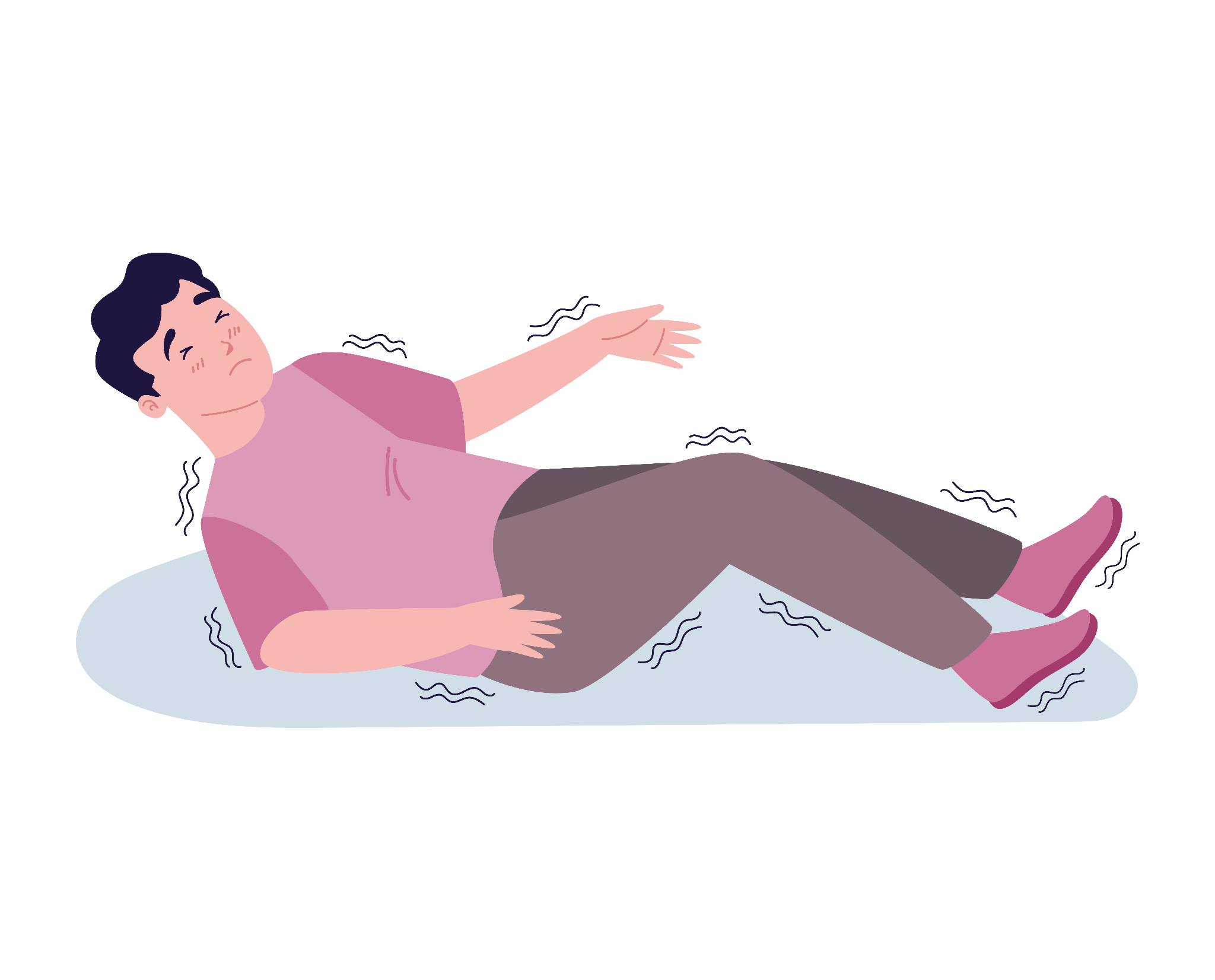
Epilepsy Explained: Causes, Symptoms, Treatment & Living Safely With Seizures
Learn what epilepsy is, its causes, symptoms, treatment options, and practical tips for living safely with seizures.
16 Dec 2025
by Prakash Hospital

अचानक बेहोशी आने के कारण (Fainting)
जानिए अचानक बेहोशी (फेंटिंग) के मुख्य कारण, इसके लक्षण और कब डॉक्टर से संपर्क करना चाहिए। सही देखभाल और बचाव के आसान उपाय भी समझें।
13 May 2026
by Prakash Hospital
Brain Hemorrhage: Warning Signs, Causes and Emergency Treatment
Learn the warning signs of brain hemorrhage, possible causes, emergency treatment options, and why immediate medical attention is critical.
19 May 2026
by Prakash Hospital

Foods That Improve Brain Power and Memory
Best Indian foods for brain power, memory, and focus. What to eat to sharpen your mind naturally. From Prakash Hospital Noida.
27 Jul 2026
by Prakash Hospital
How to Increase Brain Power Naturally
Natural, science-backed ways to increase brain power, sharpen thinking, and improve mental performance. From Prakash Hospital Noida.
24 Jul 2026
by Prakash Hospital

नस दबने की समस्या (Nerve Compression)
नस दबने की समस्या क्यों होती है? इसके शुरुआती लक्षण, कारण, इलाज और बचाव के तरीके जानें और कब डॉक्टर से संपर्क करना जरूरी है।
15 Apr 2026
by Prakash Hospital
Frequently Asked Questions
Answers to common questions about EEG (Electroencephalogram) at Prakash Hospital, Noida.
Is an EEG painful? Will I get a shock?
Can an EEG read my thoughts?
My EEG was normal. So I don't have epilepsy?
Should I stop my seizure medicine before the test?
Can children and babies have an EEG?
Is an EEG safe in pregnancy?


Looking for the Best Hospital in Noida? Talk to Our Experts
Book a consultation with Prakash Hospital's specialists — 24/7 emergency care, 100+ doctors, NABH accredited.

Prakash Hospital Pvt. Ltd. is a 100 bedded NABH NABL accredited multispecialty hospital along with a center of trauma and orthopedics. We are in the service of society since 2001.
OUR SPECIALITIES
Patient Services
PROCEDURES
Contact Us
D – 12A, 12B, Sector-33, G. B. Nagar, Noida, Uttar Pradesh 201301
+91-8826000033


© 2026 All rights reserved.
Designed and Developed by Zarle Infotech


