



Building Healthy Eating Habits in Kids
Learn how to build healthy eating habits in kids with fun, practical tips for parents. Encourage balanced nutrition, reduce picky eating and make food fun!
31 Oct 2025
by Prakash Hospital
by Prakash Hospital
by Prakash Hospital

Happy Children that have been immunized
One of the most crucial factors for a society to be healthy is the well-being of its children. Vaccination is one of the best ways to keep kids safe from serious diseases. It is also secure, cheap, and works. It is a social duty that keeps people and whole communities safe, and it is also a significant medical achievement.
In this blog, we'll discuss what immunization is, its importance, the types of vaccines children need, how it works, common myths and misunderstandings about it, and the benefits it provides to families and society as a whole.
Immunization is the process of administering a vaccine to protect an individual from contracting an infectious disease. Vaccines enhance the immune system's ability to identify and combat pathogens, such as bacteria or viruses, thereby enabling the body to react more quickly if it encounters them again.
People sometimes use the words "vaccination" and "immunization" interchangeably, but they are not precisely the same.
Giving a vaccine is what vaccination is.
Immunization is the process by which a person becomes immune to disease.
This slight difference demonstrates that vaccines are more than just shots; they are shields that prepare the body for long-term protection.
Children are more susceptible to illness because their immune systems are still developing. Polio, measles, and diphtheria are diseases that may not seem familiar today, but they used to kill and disable a lot of kids. Vaccinations have made these diseases much less common, but they could come back if people stop getting them or put them off.
Here are some significant reasons why getting vaccinated is essential:
1. Stopping diseases that kill
Vaccines keep serious diseases like polio, tetanus, hepatitis B, measles, mumps, rubella, and meningitis from spreading. Kids are still very likely to get sick if they don't get shots.
2. Improvement of Well-Being
A child who is frequently ill may experience difficulties in social, academic, and physical development. Vaccination can help them be more active and get better.
3. Herd Immunity/Community Protection
When most kids get vaccinated, it protects those who can't, such as babies or children with specific health conditions.
4. The fourth thing to consider is the cost.
It's usually less expensive to stop being sick than to get better. Vaccination helps families save money on long-term care, medications, and hospital stays.
5. The success of global health
The near-eradication of polio and the total elimination of smallpox highlight the significant influence of vaccination on global health.
Vaccines have parts of an organism (antigen) that have been killed or weakened. These parts enable the immune system to function without causing illness in the person. The immune system "remembers" the pathogen after vaccination. If the child comes into contact with the disease again, their body can quickly find and fight it.
This process is like a natural infection, but it doesn't have any of the harmful effects. The immune system learns how to respond quickly and well, like a practice run before a show.
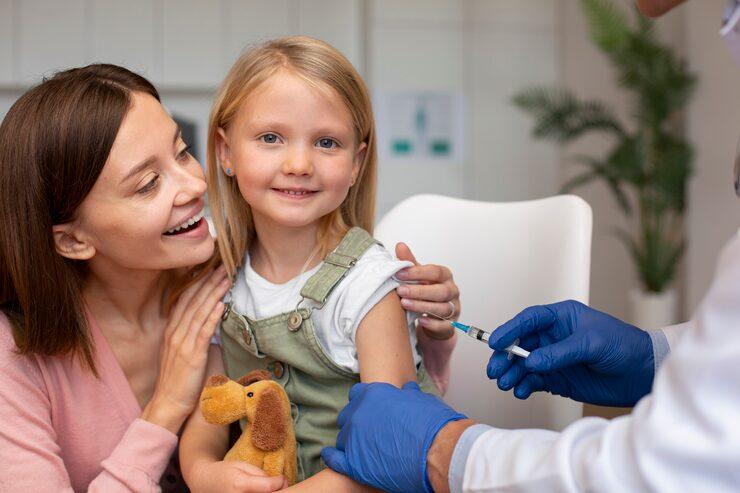
Happy child getting necessary vaccines
Most countries have their own immunization schedule, but most of them include these necessary vaccines that the World Health Organization (WHO) and national health authorities recommend:
It is essential to follow the vaccination schedule, as missing doses can put children at risk during critical stages of their development.
There are numerous myths and misunderstandings surrounding vaccines.
Despite a wealth of scientific evidence, myths about vaccines persist. To increase acceptance, these issues need to be addressed.
1. "Vaccines make kids autistic."
This myth originates from a flawed study conducted in the 1990s, which has since been disproven. Numerous studies have demonstrated no correlation between vaccines and autism.
2. "It's better to have natural immunity."
You can get immunity from a natural infection, but it can also make you very sick, cause problems, or even kill you. Vaccines protect you from disease without the dangers that come with getting sick on your own.
3. "There are too many vaccines for the immune system to handle."
Kids are always around germs. Vaccines only have a small amount of the antigens that the body naturally comes into contact with.
4. "Vaccines have things in them that are bad for you."
There are small, safe amounts of the vaccine's ingredients. Regulatory bodies subject vaccines to numerous tests before they are approved.
5. "These diseases aren't a problem anymore, so we don't need vaccines."
Even if disease rates decrease, outbreaks may recur if vaccination rates decline. For example, measles is resurfacing in some areas because fewer people are getting vaccinated.
Parents are the ones who speak up most for their children's health.
What they need to do is:
Sticking to the Vaccination Schedule: Making sure you keep track of appointments and give doses on time.
Keeping Immunization Records: An up-to-date vaccination card is helpful for emergencies, travel, and school.
Helping Healthcare Professionals: Getting answers, asking questions, and keeping up with new rules.
Raising Awareness: Getting other parents in the area to vaccinate their kids.
By doing these things, parents help keep their own kids safe and the community healthy.
The WHO, UNICEF, and Gavi, the Vaccine Alliance are just a few of the groups that have worked hard to make immunization programs more widespread around the world. These programs have saved millions of lives and helped more kids live.
There are still problems, though:
Accessibility: It's hard to give kids vaccines in rural or war-torn areas.
Misinformation: Anti-vaccine groups spread false information on social media that makes it harder to get kids vaccinated. Inequality: Kids who live in poor areas are less likely to get all the vaccines they need.
Storage and Logistics: It can be hard to keep vaccines cold (the "cold chain") in places with few resources.
We need the government to help us, other countries to collaborate with us, and the community to get involved in solving these problems.
Vaccines do more for society and the economy than just make people healthier.
1. Benefits for Learning: Healthy kids are more likely to go to school every day and do well in school.
2. Economic Productivity: Families don't have to pay for medical bills, and a healthier workforce is good for society in the long run.
3. Gender Equality: Women are often the ones who take care of sick kids. Getting vaccinated reduces the risk of getting sick, allowing mothers to attend school and work.
4. Social Stability: When outbreaks don't happen, communities are less anxious, uprooted, and disturbed.
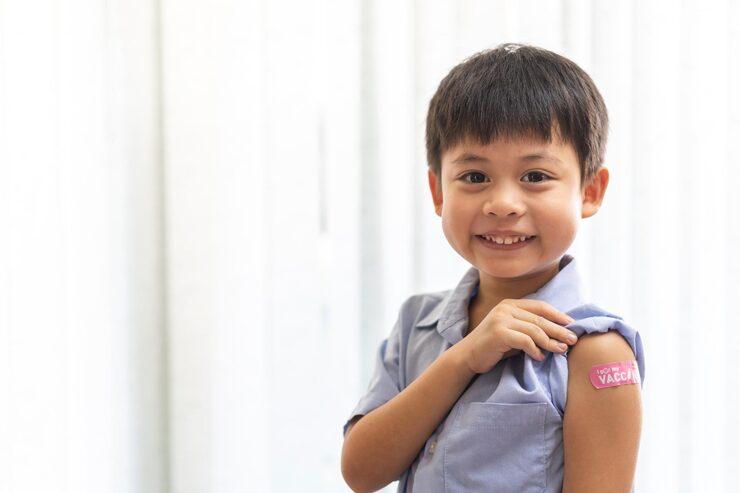
Happy vaccinated child
New vaccines and methods for administering them are being developed thanks to scientific breakthroughs. Combination vaccines, needle-free administration, and mRNA vaccines are all areas of research that could lead to a safer and more effective vaccination in the future. International efforts also aim to ensure that every child receives the vaccine, so that no one is left out.
We need to stop spreading false information and be open to new ideas if we want to keep moving forward.
One of the most significant benefits of modern medicine is its ability to prevent disease. Parents, communities, and countries can give this gift to their children to keep them from getting diseases that could be avoided and to help them have a healthier future.
Getting all kids their shots on time not only saves lives, but it also makes the world a better place. Immunization is more than just a medical procedure; it's a way to protect the health, wealth, and stability of future generations.
As parents, guardians, teachers, and citizens, it is our responsibility to promote vaccination, increase awareness, and ensure the safety of children—the future leaders of our society. Vaccinating children: safeguarding the future. For more insight, contact expert doctors at Prakash Hospital, Noida.

Replaces only the worn part of an arthritic knee, keeping the healthy cartilage and ligaments.
Realigns and rebuilds a joint damaged by injury, deformity or earlier surgery, keeping your own joint.
An ultrasound of the heart that shows how well it pumps and how the valves work. Painless and radiation-free.
Free tools to check your weight, plan a pregnancy, track calories and more.
We offer expert care across key specialties, including Medicine, Cardiology, Orthopaedics, ENT, Gynaecology, and more—delivering trusted treatment under one roof.
Learn how to build healthy eating habits in kids with fun, practical tips for parents. Encourage balanced nutrition, reduce picky eating and make food fun!
31 Oct 2025
by Prakash Hospital
Understand hypertension causes, risks, and lifestyle changes to manage high blood pressure effectively.
5 Jun 2025
by Prakash Hospital
Stay healthy this winter with immunity-boosting, hygiene, and infection-prevention tips from Prakash Hospital.
27 Oct 2025
by Prakash Hospital

What is PCOD — a complete guide to causes, symptoms, hormones, and how the condition develops. Visit Prakash Hospital Noida for expert women's health care.
20 May 2026
by Prakash Hospital

यूरिन इंफेक्शन यानी UTI क्या होता है, महिलाओं में इसके लक्षण, कारण, जांच और सही इलाज की पूरी जानकारी हिंदी में।
22 Jan 2026
by Prakash Hospital

PCOD vs PCOS — what is the difference, which is more serious, and how each is diagnosed and treated. Visit Prakash Hospital Noida for women's health care.
26 May 2026
by Prakash Hospital


Book a consultation with Prakash Hospital's specialists — 24/7 emergency care, 100+ doctors, NABH accredited.
View All Departments