


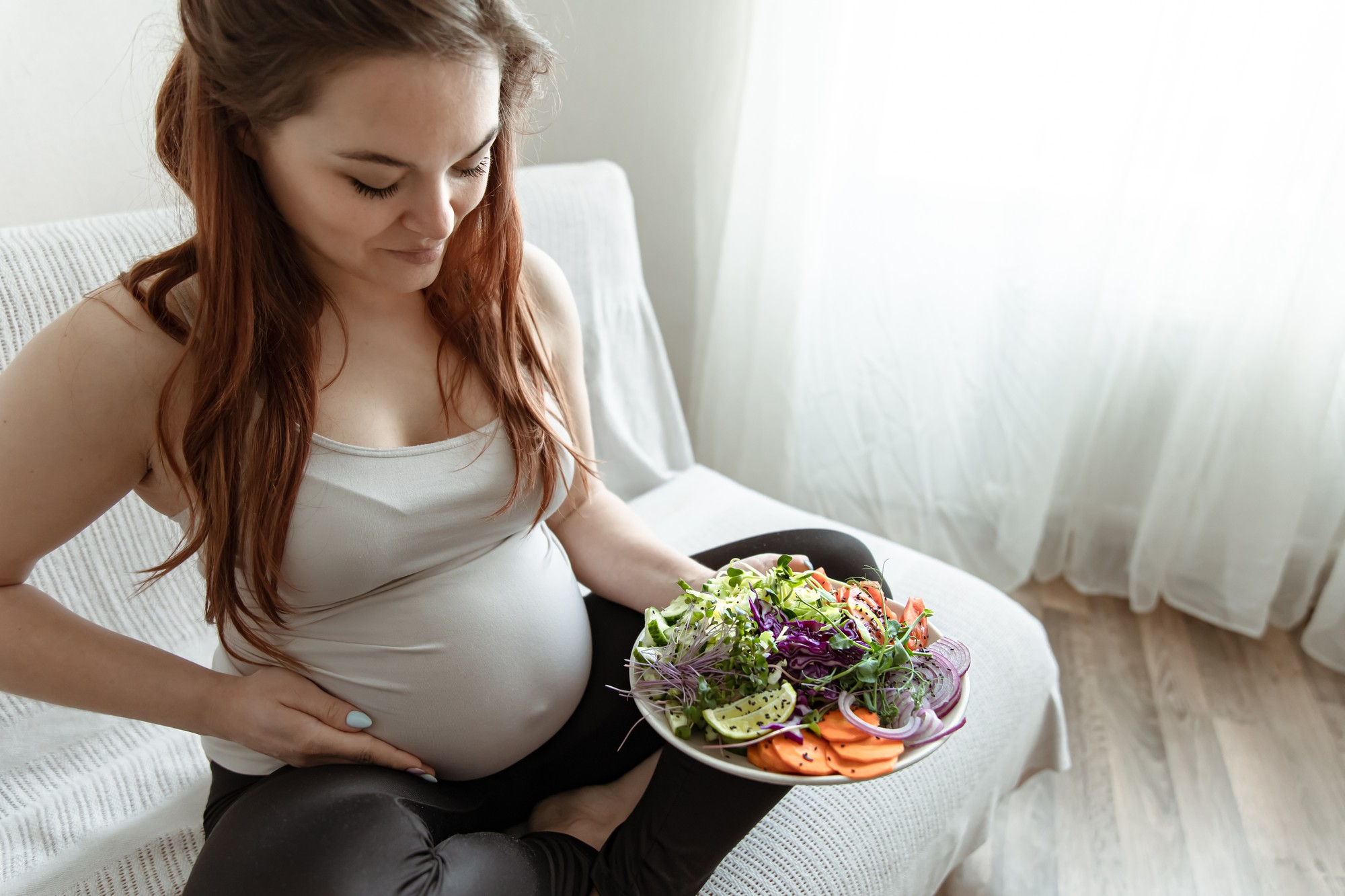
Nutrition During Pregnancy: Best Foods to Eat & Avoid for a Healthy Baby
Learn what to eat and avoid during pregnancy with expert-approved nutrition tips for a healthy mother and baby.
25 Nov 2025
by Prakash Hospital
by By Prakash Hospital

Calipers, smart scales, the Navy tape and DEXA each estimate body fat from something different, so their numbers rarely agree.
DEXA is the most reliable of the commonly available body fat measurements, a trained person with calipers can be reasonably accurate, the Navy tape method is a decent stand-alone estimate, and home smart scales are the least precise but the most convenient. No method gives you the exact truth. Each one is an estimate with its own typical error, and the most useful thing you can do is pick one and use it the same way every time.
That's the practical conclusion. The rest of this article explains why the methods disagree, what actually moves each reading, and how to set up a routine that tells you whether your plan is working. It also settles the common confusion where your smart scale says 28 percent, your tape says 24 and the gym's machine says 31.
Body fat can't be weighed directly in a living person. Every method measures something else and converts it to a percentage using a formula built on average people.
Each conversion carries assumptions: that your hydration is normal, that your fat is distributed like the average, that your bone density is typical. When you differ from the average, the number shifts. This is why you can get three different readings on the same day and all three are "correct" in the sense that each is the output of its own formula.
A smart scale sends a tiny current up one leg and down the other (some handheld devices go through the arms). Water and lean tissue conduct electricity well. Fat conducts poorly. The device measures how much the current is slowed, and uses your height, weight, age and sex to estimate fat and lean mass.
Home scales are commonly off by several percentage points compared with DEXA, in either direction, and the error varies from device to device and from person to person. Basic models are generally less accurate than higher-end ones, but even good ones are not precise. Their strength is repeatability: if you weigh yourself at the same time under the same conditions, the scale is often consistent with itself, so a drop over four weeks is likely a real signal even if the absolute number is off.
A technician pinches a fold of skin and the fat underneath it at specific sites (typically the triceps, subscapular region, abdomen, hip and thigh, with several protocols) and measures its thickness in millimetres. The sum goes into an equation such as Jackson-Pollock to predict body density and then body fat.
In the hands of an experienced, careful technician measuring the same sites each time, calipers can be quite good, within a few points of lab methods for most people. Self-measurement at home is much less reliable. It's difficult to pinch your own back and thigh correctly.
You measure height, neck and waist (and hips for women) and use a formula derived from US Navy studies (Hodgdon and Beckett, 1984).
Typically within about 3 to 4 percentage points of laboratory methods for the average person, with larger errors in very muscular, very lean or very obese people. Women's estimates tend to be a little less accurate than men's.
Measure the same way every four weeks, three times each, average the readings, and look at the waist alone as well as the formula result. Our step-by-step guide to the Navy method shows exactly how.
DEXA (dual-energy X-ray absorptiometry) scans your whole body with two very low-dose X-ray beams at different energy levels. Bone, fat and lean tissue absorb them differently, so the machine can split your body into three compartments and map where each one sits. The radiation dose is very small, a fraction of a chest X-ray.
It's considered the reference method for most clinical and research use, and it's much more precise than home methods. It isn't perfect, though. It can differ from underwater weighing and other lab methods by a couple of percentage points, and it can't separate visceral fat from fat just under the skin unless special software is used.
Fat and lean mass in each arm, leg and the trunk, an estimate of visceral fat in some systems, and bone density, which is useful for anyone worried about osteoporosis.
DEXA is available at larger hospitals and imaging centres. For routine tracking, you don't need it often. Once to set a baseline and again after three to six months of change is enough. Ask your doctor whether it's justified for you.
Hydrostatic (underwater) weighing and air displacement (Bod Pod) calculate body density and convert it to fat percentage. They're accurate and are mainly used in research and sports science settings, so they're rarely practical for the general public.
| Method | Typical error vs reference | Convenience | Best use | |---|---|---|---| | Smart scale | Often several points | Very high | Trends over weeks | | Skinfold calipers | Small with expert, larger alone | Medium | Tracking with a trained person | | Navy tape | About 3 to 4 points | High | First estimate at home | | BMI formula | Often several points, worse in Indians | Very high | Rough ballpark only | | DEXA | Lowest of the common options | Low | One-off baseline, bone density | | Underwater / Bod Pod | Low | Very low | Research, athletes |
Your goal is rarely to learn the exact true percentage. It's to know whether your fat is going down and your muscle is holding steady. For that, repeatability beats accuracy.
A routine that works:
The most accurate common method is a DEXA scan. At home, use the Navy tape method plus waist tracking, and repeat it consistently.
They're not precise for a single reading but can be useful for tracking trends if you use them under the same conditions each time.
Calipers in expert hands are usually more accurate than a home smart scale. Calipers used by yourself are less reliable.
Hydration, food, exercise and time of day all change the electrical resistance the scale measures.
The radiation dose is very low. It's generally avoided in pregnancy.
Every four weeks for home methods. Every three to six months for DEXA, if you need it at all.
If your body fat measurements are persistently high with a large waist, or you're losing weight without trying, or you have symptoms such as unusual tiredness, constant thirst or irregular periods, speak to a doctor. A number on a scale is not a diagnosis.
Whether you live in Sector 18, Sector 62, Greater Noida West, or anywhere nearby, Prakash Hospital Noida is a trusted name for weight management and preventive health in Noida. Our physicians can help you decide whether a particular measurement is worth doing and what to do with the result.
To book a consultation, call the number.
Sources: Hodgdon JA, Beckett MB. U.S. Navy body fat prediction from circumferences and height, 1984. Misra A, Shrivastava U. Obesity and dyslipidemia in South Asians. Nutrients, 2013.
Tags: #BodyFatMeasurement #DEXAScan #PrakashHospitalNoida

Endoscopic treatment through the mouth that removes bile duct stones and opens blockages causing jaundice.
Keyhole removal of an ovarian cyst that keeps the healthy ovary, usually with a stay of one night or less.
Reattaches or rebuilds torn ligaments in the knee, ankle, elbow or thumb to steady an unstable joint.
Free tools to check your weight, plan a pregnancy, track calories and more.
We offer expert care across key specialties, including Medicine, Cardiology, Orthopaedics, ENT, Gynaecology, and more—delivering trusted treatment under one roof.
Learn what to eat and avoid during pregnancy with expert-approved nutrition tips for a healthy mother and baby.
25 Nov 2025
by Prakash Hospital
Support fracture recovery with essential nutrients like calcium, vitamin D, and protein for faster bone healing.
19 Nov 2025
by Prakash Hospital

Discover expert-backed nutrition tips for cancer patients. Learn how to manage treatment side effects, stay hydrated, and eat for strength and recovery.
27 May 2025
by Prakash Hospital

How to remove sun tan from face and body — what works at home and what professional treatments offer. Prakash Hospital Noida.
10 Sept 2026
by Prakash Hospital

Best Indian foods for healthy, glowing skin — what to eat for skin hydration, collagen, and protection from UV damage. Prakash Hospital Noida.
14 Sept 2026
by Prakash Hospital
How to get glowing skin naturally — Indian diet, hydration, sleep, and skincare tips that actually work. Prakash Hospital Noida.
9 Sept 2026
by Prakash Hospital

Check your body fat percentage at home using a tape, a mirror and a few simple tests. Step-by-step instructions, common mistakes and how to read the result.
15 Oct 2026
by Prakash Hospital

Vitamin B12 deficiency symptoms — tingling, fatigue, memory issues and more. Who's at risk in India and how to fix it. Prakash Hospital Noida.
30 Sept 2026
by Prakash Hospital

Zinc deficiency symptoms such as frequent infections, hair fall and slow healing, who is most at risk in India, and how to fix it. Prakash Hospital Noida.
2 Oct 2026
by Prakash Hospital


Book a consultation with Prakash Hospital's specialists — 24/7 emergency care, 100+ doctors, NABH accredited.
View All Departments