



रोटेटर कफ इंजरी (Shoulder Injury) क्या है?
रोटेटर कफ इंजरी के लक्षण, कारण और इलाज जानें। कंधे में दर्द और कमजोरी को नजरअंदाज न करें। Prakash Hospital में पाएं एडवांस ऑर्थोपेडिक और फिजियोथेरेपी उपचार।
15 Jun 2026
by Prakash Hospital
by Prakash Hospital
by Prakash Hospital

A doctor examining a patient’s shoulder
Shoulder pain and stiffness can make it hard to accomplish even the simplest activities, including lifting things, brushing your hair, or even sleeping soundly. People who have severe shoulder injuries from arthritis, fractures, or degenerative conditions can benefit from shoulder replacement surgery. It is a safe and effective procedure that not only restores movement but also considerably improves quality of life.
The shoulder is one of the joints in the body that can move the most. The humerus is the bone in the upper arm, the scapula is the bone in the shoulder, and the clavicle is the collarbone. The ball-and-socket form lets the joint move in many directions, but it also makes it easy to wear out.
Shoulder arthroplasty, often known as shoulder replacement surgery, is a surgery that replaces broken parts of the shoulder joint with fake parts made of metal, plastic, or a mix of the two. The goal is to alleviate discomfort, enable individuals to resume movement, and assist them in returning to their everyday lives.
A patient getting their shoulder examined pre-surgery
Doctors frequently suggest surgery when other treatments, such medicines, physical therapy, or injections, stop working. Shoulder replacement may be necessary for several common conditions, such as:
There are different types of surgery to replace the shoulder. Not all shoulder replacement surgeries are the same. Depending on the patient's condition, surgeons may recommend one of the following surgeries:
The kind that happens the most. A new plastic piece is fitted on the socket (glenoid) and a metal ball is put in place of the broken ball (humeral head). This is beneficial for individuals whose rotator cuff muscles are still functioning. With partial shoulder replacement (hemiarthroplasty), only the damaged head of the humerus is replaced with a metal implant. Commonly used for severe fractures when the socket is still in good shape.
The most significant component of achieving a good result is preparation. Before the procedure, patients might need to undertake the following:
Shoulder replacement surgery usually takes one to two hours and is done while the patient is asleep. The main steps are:
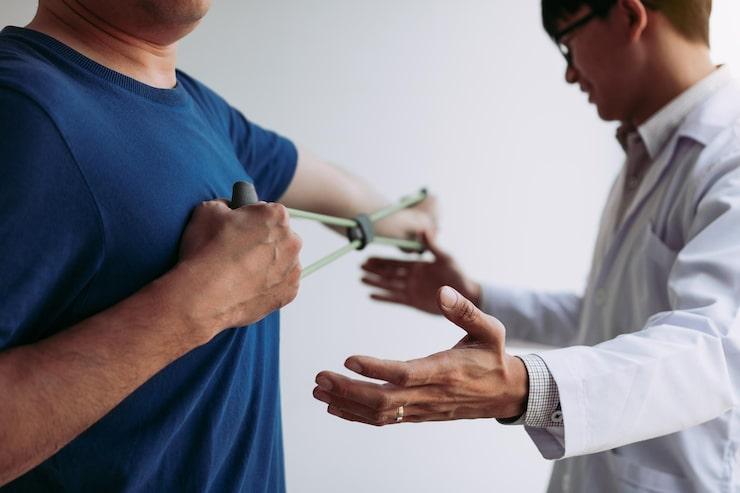
A patient getting help exercising post surgery
It takes time and patience to feel better after having shoulder replacement surgery. The steps that usually happen throughout the healing process are:
Most people who undergo shoulder replacement surgery experience a significantly improved quality of life thereafter. Here are some of the benefits:
There are certain risks with shoulder replacement surgery, but they aren't particularly prevalent. These could include an infection at the operation site.
If you keep in constant touch with the surgeon and follow the rehabilitation rules, these risks are lower. Life goes on after a shoulder replacement.
After surgery, most patients feel better and have less pain for a long time. But you need to do things to keep the phony joint safe:
If someone has significant shoulder pain and can't move, shoulder replacement surgery can alter their life. Because of better surgical techniques and implant technology, the results have gotten much better, and patients may now live pain-free and active lives again. Patients may make sensible choices about surgery if they know what it is, how long it will take to heal, the pros and cons, and the risks. With the proper preparation, medical advice, and commitment to rehabilitation, shoulder replacement can restore movement, independence, and a higher quality of life.

Rebuilds a torn ACL with a tendon graft through keyhole surgery to stop the knee giving way.
Reattaches or rebuilds torn ligaments in the knee, ankle, elbow or thumb to steady an unstable joint.
Replaces a worn or collapsed hip ball and socket with an artificial joint to end groin pain and restore walking.
Free tools to check your weight, plan a pregnancy, track calories and more.
We offer expert care across key specialties, including Medicine, Cardiology, Orthopaedics, ENT, Gynaecology, and more—delivering trusted treatment under one roof.
रोटेटर कफ इंजरी के लक्षण, कारण और इलाज जानें। कंधे में दर्द और कमजोरी को नजरअंदाज न करें। Prakash Hospital में पाएं एडवांस ऑर्थोपेडिक और फिजियोथेरेपी उपचार।
15 Jun 2026
by Prakash Hospital
हड्डियों में सूजन के कारण, लक्षण और इलाज जानें। ऑस्टियोमाइलाइटिस, आर्थराइटिस और हड्डी के दर्द को नजरअंदाज न करें। Prakash Hospital में पाएं एडवांस ऑर्थोपेडिक उपचार।
9 Jun 2026
by Prakash Hospital
Discover expert-approved orthopedic fitness strategies with safe exercises to support your joints, reduce pain, and improve mobility. Ideal for all age groups.
25 Jun 2025
by Prakash Hospital

Learn about stress fractures, including causes, symptoms, treatment options, and recovery tips for faster healing and injury prevention.
18 May 2026
by Prakash Hospital

स्लिप डिस्क क्या होती है, इसके कारण, लक्षण, जांच और बिना सर्जरी इलाज के विकल्प हिंदी में जानें।
28 Jan 2026
by Prakash Hospital

जानिए लिगामेंट टियर के कारण, लक्षण और इलाज के तरीके। सही देखभाल, फिजियोथेरेपी और आराम से रिकवरी कैसे तेजी से हो सकती है, समझें।
14 May 2026
by Prakash Hospital
Learn how bones heal after a fracture, from inflammation to remodeling. Understand the stages of bone healing, recovery time, and tips for faster healing.
15 Dec 2025
by Prakash Hospital

Identify warning signs of orthopedic problems early and learn when to consult a specialist for joint and bone care.
6 Jun 2025
by Prakash Hospital

Learn about bone fractures in adults including types of fractures, causes, symptoms, diagnosis, treatment options at Prakash Hospital.
23 Feb 2026
by Prakash Hospital


Book a consultation with Prakash Hospital's specialists — 24/7 emergency care, 100+ doctors, NABH accredited.
View All Departments