


एक्जिमा (Eczema) क्या है?
एक्जिमा के लक्षण, कारण, प्रकार और इलाज जानें। खुजली, लाल चकत्ते और रूखी त्वचा से परेशान हैं? Prakash Hospital में पाएं विशेषज्ञ डर्मेटोलॉजी परामर्श और उपचार।
8 Jun 2026
by Prakash Hospital
by Prakash Hospital
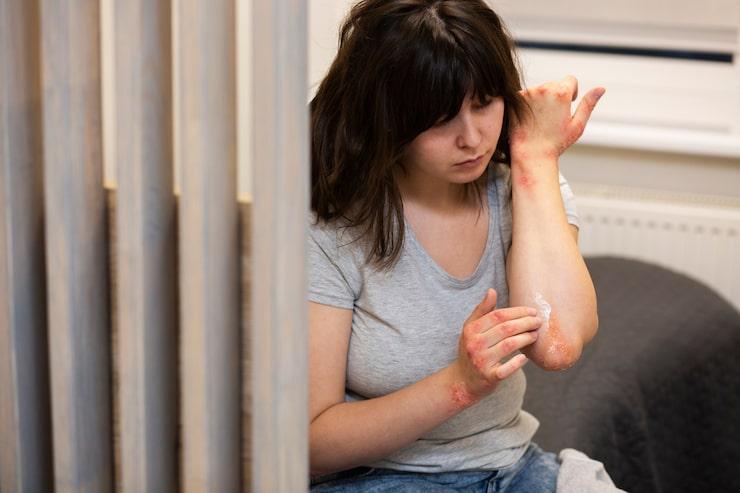
woman applying lotion to her eczema
The itching wakes you up at night. The patches on your elbows and behind your knees come back every winter. The skin around your fingers cracks and flakes. You have tried multiple creams, some prescribed and some over-the-counter. Nothing seems to provide lasting relief. The condition feels like a permanent annoyance you have to live with.
Eczema, or atopic dermatitis, is one of the most common chronic skin conditions. It affects an estimated 10 to 20 percent of children and 1 to 3 percent of adults globally. In India, the prevalence is rising, particularly in urban areas. The condition cannot be permanently cured, but it can be effectively managed. Most people with eczema can achieve substantial control with the right approach.
This article walks through what eczema actually is, how to recognise it, the triggers that worsen it, and the treatments that genuinely help.
Eczema is a chronic inflammatory skin condition. The exact cause is not fully understood, but it involves a combination of:
Genetic factors — eczema often runs in families and is associated with asthma and allergies.
Skin barrier dysfunction — the skin's outer layer does not function properly, allowing moisture loss and irritant entry.
Immune system overreaction — the immune system reacts excessively to triggers that would not affect normal skin.
Environmental factors — climate, irritants, allergens, infections.
The combination creates skin that is dry, easily irritated, prone to itching, and inflamed in response to many triggers.
The medical term atopic dermatitis is the most common type of eczema. "Atopic" refers to the genetic tendency to develop allergic conditions including eczema, asthma, and hay fever — often called the "atopic triad."
Atopic dermatitis — the most common type. Chronic, often starting in childhood, with characteristic patterns.
Contact dermatitis — reaction to specific substances touching the skin.
Dyshidrotic eczema — small blisters on hands and feet.
Nummular eczema — coin-shaped patches.
Seborrheic dermatitis — affecting oily areas like scalp and face.
Stasis dermatitis — on lower legs, related to poor circulation.
Neurodermatitis — chronic scratching creating thickened patches.
This article focuses primarily on atopic dermatitis, the most common form.
The classic features:
Itchy skin — often the dominant symptom. Itching can be severe and disrupt sleep.
Dry, scaly skin — particularly when not in active flare.
Red, inflamed patches — during flares.
Common locations — inner elbows, behind knees, neck, wrists, ankles, hands, face (in children).
Patterns by age:
Infants — face, scalp, outer arms and legs.
Children — flexural areas (inside of elbows and behind knees), neck, wrists, ankles.
Adults — flexural areas, hands, eyelids, neck, sometimes more widespread.
Other features:
Several factors contribute:
Genetic predisposition — strongly hereditary. Family history of eczema, asthma, hay fever, or allergies increases risk.
Filaggrin gene variations — affect skin barrier function. Common in people with eczema.
Skin barrier defects — the outer skin layer cannot retain moisture or block irritants properly.
Immune system hyperreactivity — overreacts to normally tolerable triggers.
Environmental factors — increasingly recognised as significant. Urban living, pollution, climate changes, and lifestyle factors all influence eczema rates.
Allergies — food allergies and environmental allergies can contribute, especially in children.
Microbiome — the bacteria living on skin and in the gut influence eczema. Disruptions can worsen the condition.
Triggers vary by individual. Common ones include:
The pattern, distribution, and characteristics often confirm the diagnosis.
Family history, personal history of allergies or asthma, age of onset, pattern of flares, suspected triggers.
For suspected contact dermatitis component.
When food or environmental allergies are suspected as triggers.
Rarely needed but useful when diagnosis is unclear.
This is the most important part. Without consistent daily skincare, no other treatment works as well.
Gentle cleansing:
Moisturise immediately after bathing:

Moisturizing skin immediately after bathing.
Choose the right moisturiser:
Daily routine:
Topical corticosteroids — first-line for flares. Various strengths for different body areas. Used for short periods then tapered.
Topical calcineurin inhibitors — tacrolimus and pimecrolimus. Useful for sensitive areas (face, eyelids) and long-term maintenance. Non-steroidal.
Topical PDE-4 inhibitors — newer option for mild to moderate eczema.
Topical JAK inhibitors — newer option for some patients.
Oral antihistamines — help with itching, especially at night.
Oral corticosteroids — short-term use for severe flares only.
Immunosuppressant medications — for severe eczema not responding to other treatments.
Biologics — newer injectable medications (dupilumab, others) for moderate to severe eczema. Have revolutionised treatment of difficult cases.
UVB light therapy can help moderate to severe eczema. Series of sessions under medical supervision.
Eczema-affected skin is prone to infection. Bacterial infections (especially Staph) need antibiotics. Viral infections may need antiviral medications.
When eczema flares:
Increase moisturisation — multiple times daily.
Use prescription topical medications as directed.
Cool compresses can reduce itching.
Wet wrap therapy — wet bandages over moisturiser to deeply hydrate during severe flares.
Avoid scratching — easier said than done but critical. Trim nails short. Wear cotton gloves at night if needed.
Identify and remove triggers — known irritants or allergens.
Sleep with cooler temperatures — heat worsens itching.
Stress management — particularly important during flares.
See a doctor if flares are severe or not responding.
For most adults, dietary changes are not the primary intervention. For children with eczema and confirmed food allergies, specific avoidance may help. For adults, an anti-inflammatory diet (omega-3 rich, antioxidant-rich, limited processed foods) supports overall skin health.
Stress is a powerful eczema trigger. Yoga, meditation, hobbies, social connections, and adequate sleep all help.
7 to 9 hours of quality sleep. Itching disrupts sleep, and poor sleep worsens eczema.
Sun can help or worsen eczema depending on the individual. Brief sun exposure may help some people. Sunburn worsens all eczema.
Eczema commonly starts in infancy or early childhood. Many children outgrow it by adolescence, but it can persist or recur.
Common patterns:
Treatment considerations:
Tips for parents:
Chronic eczema significantly affects quality of life. Sleep disruption, body image concerns, social anxiety, and treatment burden all contribute.
Anxiety and depression are more common in people with chronic eczema. Mental health support, when needed, is part of comprehensive care.
"Eczema is just dry skin." It is an inflammatory condition. Dryness is part of it but not the whole picture.
"Eczema can be permanently cured." No permanent cure exists, but excellent management is possible.
"Steroid creams are dangerous." Used correctly, they are safe and effective. Misuse can cause problems.
"Stopping triggers cures eczema." Avoiding triggers reduces flares but does not cure the underlying condition.
"Eczema is caused by poor hygiene." It is not. In fact, excessive washing often worsens it.
"Diet is the main cause." For most adults, diet is one factor among many. Severe food allergy-driven eczema does exist, particularly in children.
"Eczema is contagious." It is not.
"Children always outgrow eczema." Many do, but some continue into adulthood.
"Natural products are always better." Some natural products (like certain essential oils) can actually trigger eczema flares.
"You should keep eczema dry." Moisture is essential. Keeping eczema dry worsens it.
Hormonal changes can affect eczema — sometimes improving, sometimes worsening. Many treatments need to be modified during pregnancy. Discuss with your doctor.
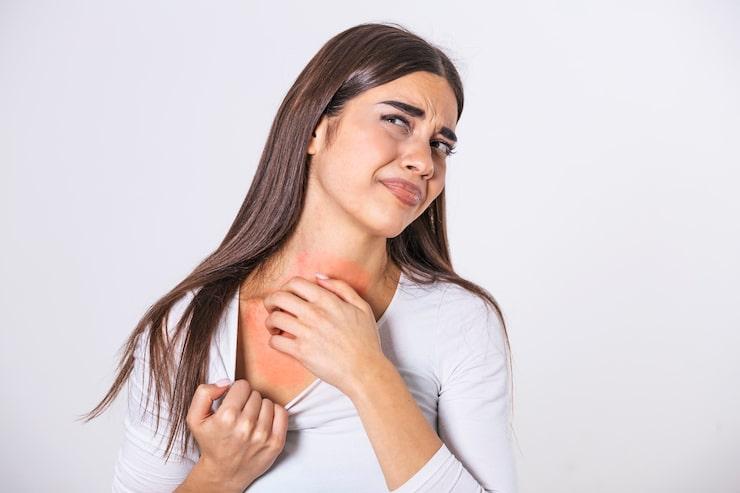
Irritated woman with eczema scars
Skin becomes naturally drier with age. Eczema management focuses heavily on consistent moisturisation. Different conditions like stasis dermatitis become more common.
Higher risk of skin infections complicating eczema. Tighter management important.
Common combination. Treating allergies and asthma can sometimes improve eczema.
A consultation makes sense when:
A dermatologist can confirm the diagnosis, identify triggers, prescribe stronger treatments, and develop a long-term management plan.
Eczema rates are increasing in Noida and Delhi NCR. Multiple factors contribute — pollution, hard water, climate variations, dust mites in indoor environments, stress, and lifestyle factors.
Practical adaptations include using filtered water for bathing when possible, air purifiers at home, consistent moisturisation despite seasonal changes, stress management, and dermatology consultation for difficult cases.
At Prakash Hospital, Noida, experienced dermatologists offer comprehensive eczema evaluation, identification of triggers, allergy testing when relevant, and personalised treatment plans ranging from skincare guidance to advanced treatments including biologics.
Whether you are in Sector 18, Sector 62, Greater Noida West, or anywhere nearby, Prakash Hospital Noida is a trusted name for dermatology consultation.
To book a consultation, call the number.
Eczema is a chronic condition, but it is one of the most manageable chronic skin diseases when approached systematically. The reliable framework includes daily consistent skincare, identifying and avoiding personal triggers, prompt treatment of flares, and ongoing partnership with a dermatologist when needed.
The two non-negotiable habits are consistent daily moisturisation and trigger avoidance. Without these, no other treatment works as well as it should.
Newer treatments — particularly biologics like dupilumab — have transformed outcomes for people with moderate to severe eczema who previously had limited options. The field continues to advance.
For most people, eczema can be controlled to the point where it is a minor inconvenience rather than a dominant feature of daily life. The path requires consistency, patience, and the right medical guidance. The investment is worth it. Most people who follow good management see substantial improvement in their skin and their quality of life.

This article covers skin and hair concerns. These Prakash Hospital doctors in Noida treat them.

Dr. Mohna Chauhan
Consultant Dermatologist & Cosmetic Surgeon
Dermatology · Cosmetic Surgery
Surgery, often with injections, to make wide, raised or tight scars flatter and less noticeable.
Laser light damages hair roots to reduce unwanted hair over 6 to 8 sessions, with settings matched to your skin.
Creams, light therapy, tablets and grafting to stop white patches spreading and restore skin colour.
Free tools to check your weight, plan a pregnancy, track calories and more.
We offer expert care across key specialties, including Medicine, Cardiology, Orthopaedics, ENT, Gynaecology, and more—delivering trusted treatment under one roof.
एक्जिमा के लक्षण, कारण, प्रकार और इलाज जानें। खुजली, लाल चकत्ते और रूखी त्वचा से परेशान हैं? Prakash Hospital में पाएं विशेषज्ञ डर्मेटोलॉजी परामर्श और उपचार।
8 Jun 2026
by Prakash Hospital
Eczema symptoms, triggers, and how to manage flares in India. Practical guide from Prakash Hospital Noida.
11 Sept 2026
by Prakash Hospital
Learn all you need to know about Eczema from this curated guide with the valuable insight of the doctors from Prakash Hospital, Noida.
17 Sept 2025
by Prakash Hospital

Does dandruff cause hair fall? The link between scalp inflammation and hair loss — and how to treat both. Prakash Hospital Noida.
7 Sept 2026
by Prakash Hospital

Natural ways to stop hair fall at home — diet, scalp care, Ayurvedic remedies with evidence, and what to avoid. Prakash Hospital Noida.
2 Sept 2026
by Prakash Hospital

Which vitamin deficiencies cause hair fall — iron, vitamin D, B12, and zinc. How to test and fix them. Prakash Hospital Noida.
4 Sept 2026
by Prakash Hospital

Skin rash — understand the common causes, types, and when a rash needs medical attention. Visit Prakash Hospital Noida for dermatology consultation.
6 Jul 2026
by Prakash Hospital
How to stop hair fall — understand the real causes, effective treatments, and prevention strategies. Visit Prakash Hospital Noida for trichology consultation.
22 May 2026
by Prakash Hospital

Dark circles under eyes — understand the causes, effective treatments, and how to remove them. Visit Prakash Hospital Noida for dermatology care.
1 Jun 2026
by Prakash Hospital


Book a consultation with Prakash Hospital's specialists — 24/7 emergency care, 100+ doctors, NABH accredited.
View All Departments