Heart Attack Signs and Symptoms: Recognise Them Early
·by Prakash Hospital
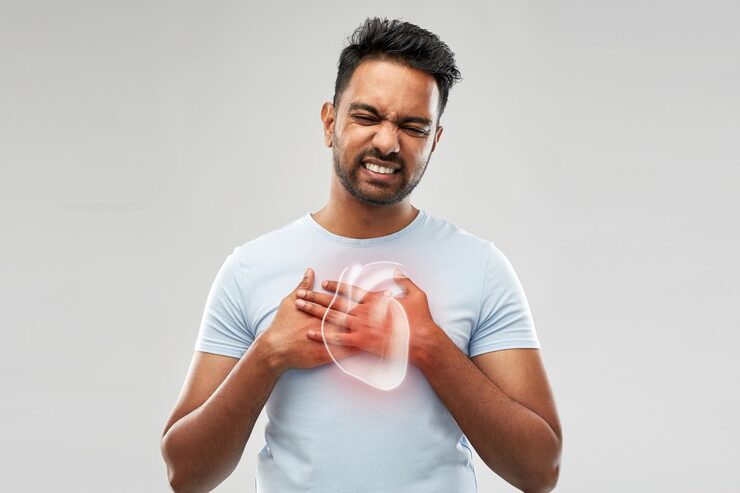
Man having a heart attack
In India, heart attacks happen at younger ages than in many other countries. The pattern in clinics shows people in their late 30s and 40s presenting with heart disease that would have been unusual a generation ago. Family history, dietary habits, sedentary lifestyles, smoking, stress, diabetes, and high blood pressure all contribute.
The first hour after symptoms start, sometimes called the "golden hour," determines outcomes. Recognising the signs and acting quickly can save lives. Delays, often from minimising symptoms or trying home remedies first, cause much of the avoidable damage.
This is a practical guide to recognising a heart attack, understanding the different ways it can appear, and knowing what to do.
What a heart attack actually is
The heart muscle needs constant blood supply through the coronary arteries. When one of these arteries becomes blocked, the part of the heart it supplies starts dying within minutes. This is a heart attack (myocardial infarction).
The blockage usually happens when atherosclerotic plaque (cholesterol buildup) inside an artery wall ruptures, and a blood clot forms over the rupture, completely blocking blood flow.
Time matters because each minute of blocked blood flow means more heart muscle damage. Restoring blood flow within an hour usually saves most of the muscle. After several hours, much of the damage is permanent.
Classic heart attack symptoms
The most recognised heart attack symptoms are reasonably consistent, but not everyone has them in textbook form.
1. Chest discomfort
The most common symptom in most people. Usually in the centre or left side of the chest. The character varies:
Pressure or heaviness ("like an elephant sitting on my chest")
Squeezing or tightness
Fullness
Burning
Sharp pain in some cases
Sometimes described as gas or indigestion that does not go away
Usually lasts more than a few minutes. Sometimes it comes and goes. Often gets worse over minutes.
2. Radiating pain
Pain often spreads beyond the chest:
Left arm (most common)
Both arms
Neck and jaw
Upper back
Upper abdomen
In some cases, the chest pain is mild but the radiating pain (jaw, arm, back) is prominent.
3. Shortness of breath
Often accompanies chest pain. Sometimes occurs without significant chest pain, especially in women, older adults, and people with diabetes.
The breathlessness can be at rest or with minimal activity that previously caused no problem.
4. Cold sweats
Suddenly breaking into a sweat, often described as a cold or clammy feeling.
5. Nausea or vomiting
Sometimes the dominant symptom, especially in heart attacks affecting the lower part of the heart.
6. Lightheadedness or fainting
The heart not pumping effectively leads to reduced blood flow to the brain.
7. Sense of impending doom
Many heart attack survivors describe an overwhelming feeling that something is seriously wrong.
8. Extreme fatigue
Sudden unusual tiredness, sometimes for days before a heart attack, sometimes during.
How heart attacks present differently
The textbook description does not capture everyone. Several groups commonly have atypical presentations.
1. Women
Women often have less typical symptoms than men:
Less prominent chest pain
More breathlessness
More fatigue
More nausea
More upper back, neck, or jaw pain
More general unwellness
Women are also more likely to delay seeking care, partly because the symptoms do not match the dramatic chest-clutching image in popular culture. This delay worsens outcomes.
2. People with diabetes
Nerve damage from diabetes can reduce the chest pain signal. Some have "silent heart attacks" with little or no pain:
More breathlessness
More fatigue
More nausea
Sometimes only mild discomfort
Confusion in older adults
3. Older adults
May present with confusion, weakness, breathlessness rather than classic chest pain.
4. Younger adults
Less common but increasing. May be the first sign of underlying coronary disease. Sometimes triggered by drug use (cocaine), severe stress, or extreme physical exertion in someone with undiagnosed coronary disease.
5. Silent heart attacks
Some heart attacks have minimal or no symptoms, discovered later on an ECG done for other reasons. More common in diabetics and women.
What to do if you suspect a heart attack
Time is muscle. The faster you get treatment, the more heart muscle is saved.
Immediate steps:
Stop what you are doing. Sit down. Stay calm.
Call for emergency help. In India, calling an ambulance (102 or 108) or family member to take you to the nearest hospital with cardiac care is essential.
If you have aspirin available and are not allergic, chew (do not swallow whole) a 300 mg tablet. This thins the blood and may reduce clot growth.
Do not drive yourself.
If you are at home, unlock the front door so help can get in.
Loosen tight clothing.
Stay still until help arrives.
Do not
Wait to see if it passes
Try home remedies like coconut water, salt water, or hot drinks first
Take pain medications other than aspirin
Drive yourself to the hospital
Try to walk a long distance
Wait for the family doctor to arrive at home
If someone collapses
Check responsiveness (tap shoulders, ask loudly)
Check breathing (look at the chest for 10 seconds)
If unresponsive and not breathing normally, start CPR immediately
Call for help
Continue CPR until help arrives or an AED is available
CPR keeps blood flowing to the brain and heart until proper help arrives. Learning basic CPR is worth the few hours of training.
What happens at the hospital
When you arrive:
Immediate assessment: vital signs, ECG within 10 minutes, blood tests for cardiac markers (troponin), examination.
ECG: shows the type of heart attack:
STEMI (ST-elevation myocardial infarction): complete blockage, needs urgent reopening of the artery
NSTEMI (non-ST-elevation): partial blockage, also urgent but slightly different treatment
Initial treatment:
Aspirin if not already taken
Other blood thinners
Beta-blockers
Nitrates for pain
Pain relief
Oxygen if needed
Statins started early
Reopening the artery:
For STEMI, the priority is reopening the blocked artery within 90 minutes if possible:
Primary angioplasty (PCI): a catheter is threaded to the blocked artery, a balloon opens it, and a stent is placed. This is the preferred treatment when available.
Thrombolysis: clot-busting medication given through a vein. Used when angioplasty is not available within the time window.
Coronary artery bypass surgery (CABG): for some specific situations.
For NSTEMI, treatment is similar but usually within 24 to 72 hours.
Hospital stay: usually 3 to 7 days, depending on the severity and treatment.
Cardiac rehabilitation: a structured programme of exercise, education, and lifestyle changes after a heart attack. Improves outcomes significantly.
After a heart attack
Life after a heart attack involves:
1. Medications: usually lifelong, including aspirin, other blood thinners, statins, beta-blockers, ACE inhibitors, sometimes others.
2. Lifestyle changes: same as for prevention, but more critical:
Healthy diet
Regular exercise (graduated programme through cardiac rehab)
Stop smoking completely
Weight management
Blood pressure control
Diabetes control
Cholesterol management
Stress management
Adequate sleep
Limited alcohol
3. Follow-up: regular cardiology visits, periodic tests, monitoring for complications.
4. Mental health: depression and anxiety are common after a heart attack. Address them actively.
5. Return to activities: usually possible, with appropriate caution. Most people return to work and a near-normal life.
Conditions that mimic heart attacks
Several conditions cause chest pain that is not a heart attack:
1. Gas and indigestion: usually relieves with antacids, related to meals, no exertional component.
2. Muscle strain: pain reproducible with pressing or movement.
3. Costochondritis (inflammation of rib cartilage): tender to touch.
4. Anxiety and panic attacks: associated with feelings of dread, hyperventilation, tingling in hands.
5. Gallbladder problems: usually after fatty meals, in the upper right abdomen.
6. Aortic dissection: tearing pain in chest and back, very serious, needs urgent care.
7. Pulmonary embolism: clot in the lungs, with chest pain and breathlessness.
8. Pericarditis: inflammation of the heart's lining, sharp pain that changes with position.
The rule is simple: if there is doubt, go to the hospital. A normal ECG and blood tests rule out heart attack quickly. The cost of an unnecessary check-up is small. The cost of missing a heart attack is enormous.
Risk factors for heart attacks
Some you cannot change:
Age (risk rises with age, but heart attacks happen at younger ages in India)
Male gender (men have higher risk earlier; women's risk rises after menopause)
Family history (especially early heart disease in close relatives)
Asian Indian ethnicity (higher genetic risk)
Modifiable risk factors
High blood pressure
High cholesterol
High triglycerides
Diabetes and prediabetes
Smoking
Obesity, especially abdominal
Limited physical activity
Poor diet
Excess alcohol
Stress
Sleep apnea
Inflammatory conditions
Addressing the modifiable factors prevents most heart attacks.
Preventing heart attacks
The same lifestyle measures that lower cholesterol, blood pressure, and diabetes risk prevent heart attacks:
Diet: Mediterranean-style or Indian variations. More vegetables, fruits, whole grains, dals, nuts, fish. Less fried food, sweets, refined carbs, red meat, processed foods.
Exercise: 150 minutes of moderate exercise per week. Brisk walking, cycling, swimming. Strength training twice a week.
Weight: maintain healthy weight. Waist circumference matters: under 90 cm for men, under 80 cm for women (Asian Indian criteria).
Smoking: stop completely. Even one cigarette a day raises heart attack risk significantly.
Blood pressure: target below 130/80 in most people. Check regularly. Treat if high.
Diabetes: prevent it or control it well.
Cholesterol: know your numbers. Treat if high.
Stress: yoga, meditation, hobbies, social connection, adequate sleep.
Alcohol: limited or none.
Regular check-ups: especially after age 35 in Indians. ECG, lipid profile, blood sugar, blood pressure at least annually.
Screening tests: for high-risk individuals, the doctor may suggest treadmill tests, echocardiogram, or coronary calcium scans.
Common myths
"Heart attacks only happen to older people." Increasingly common in 30s and 40s in India.
"If chest pain is sharp, it is not a heart attack." Pain character varies. Sharp pain does not rule out a heart attack.
"Young thin people do not get heart attacks." Body weight is just one factor. Family history, smoking, and other factors matter.
"You will know it is a heart attack because of the dramatic symptoms." Many heart attacks have subtle symptoms, especially in women and diabetics.
"Aspirin causes the heart attack." Aspirin during a suspected heart attack is helpful, not harmful.
"You can wait it out at home." Time matters. Delays cause more damage.
"Coconut water cures heart attacks." No. Get to a hospital.
"Drinking water during a heart attack helps." Does not change the situation. Get to a hospital.
"You can predict heart attacks from chest sensations." Predictable warning signs exist (angina with exertion). Sudden attacks often happen without specific prior warnings.
"Heart attacks always cause cardiac arrest." Most do not, though cardiac arrest can happen.
Warning signs in the days before
Sometimes warning signs appear in the days or weeks before a heart attack:
New chest discomfort with exertion
Unusual fatigue
Breathlessness with activities that previously caused no problem
Indigestion that does not respond to usual remedies
Discomfort that comes and goes with effort
These deserve evaluation. Do not dismiss them. An ECG, blood tests, and sometimes a stress test or angiography can identify problems before they become catastrophic.
Care at Prakash Hospital Noida
At Prakash Hospital Noida, our cardiology team provides 24x7 cardiac emergency care including ECG, cardiac markers testing, echocardiogram, and treatment for heart attacks. Cardiac rehabilitation, preventive cardiology, and follow-up care are integrated. The hospital is equipped to handle cardiac emergencies promptly.
Whether you live in Sector 18, Sector 62, Greater Noida West, or anywhere nearby, Prakash Hospital Noida is a trusted name for cardiology and emergency cardiac care in Noida.
To book a consultation, call the number.
A practical takeaway
Heart attacks happen at younger ages in India than in most parts of the world. Recognising symptoms and acting quickly saves lives.
Classic symptoms include chest discomfort, pain spreading to arm or jaw, breathlessness, cold sweats, nausea. Women, diabetics, and older adults often have less typical symptoms.
If a heart attack is suspected, call for emergency help, chew aspirin if available, sit down, and wait for help. Do not drive yourself. Do not wait.
Prevention works. Lifestyle changes, control of risk factors (cholesterol, blood pressure, diabetes), no smoking, and regular check-ups prevent most heart attacks.
Know your numbers. Know your risk. Act on what you find. The work you put in now matters far more than any single moment of crisis.
We offer expert care across key specialties, including Medicine, Cardiology, Orthopaedics, ENT, Gynaecology, and more—delivering trusted treatment under one roof.
Understand the critical difference between a heart attack and cardiac arrest, their symptoms, causes, emergency response steps, and treatment options. Learn when to seek urgent help from expert cardiologists at Prakash Hospital.
Air pollution harms your lungs and heart, increasing risk of asthma, COPD, heart attacks, and stroke. Learn its effects, symptoms, long-term risks, and prevention tips. Expert care available at Prakash Hospital.
जानिए लो हीमोग्लोबिन का दिल की सेहत पर क्या प्रभाव पड़ता है। इसके कारण, लक्षण और समय पर इलाज व सही खानपान से कैसे बचाव किया जा सकता है, सरल भाषा में समझें।