


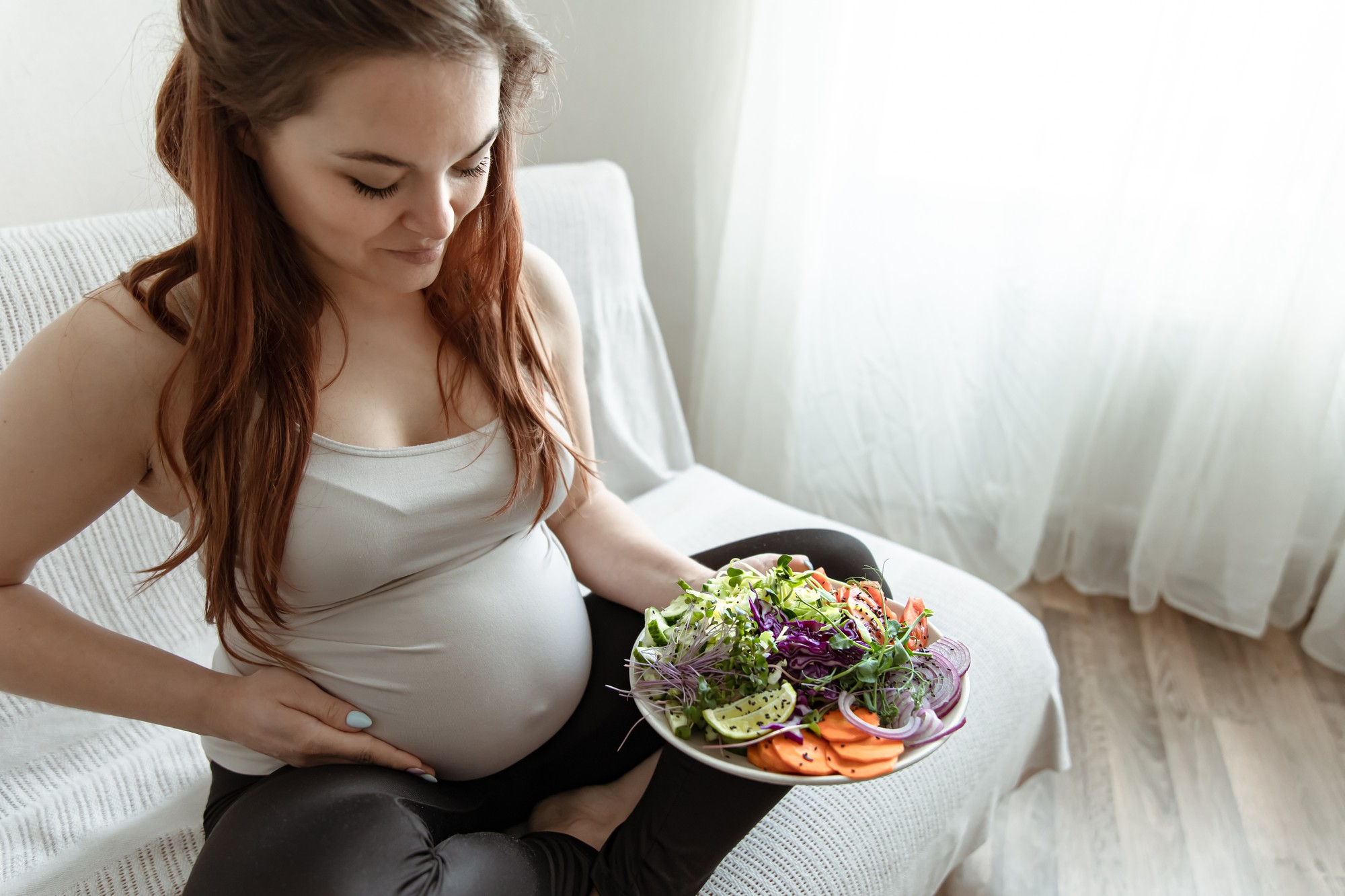
Nutrition During Pregnancy: Best Foods to Eat & Avoid for a Healthy Baby
Learn what to eat and avoid during pregnancy with expert-approved nutrition tips for a healthy mother and baby.
25 Nov 2025
by Prakash Hospital
by By Prakash Hospital

A person with short sleeves is measuring their waist with a yellow tape measure while holding a bowl of fresh vegetables, including lettuce and cherry tomatoes, in the other hand.
To lower your body fat percentage, lose fat slowly while keeping your muscle. That means a moderate calorie deficit (about 400 to 550 kcal a day), 1.2 to 1.6 g of protein per kg of body weight, strength training two or three times a week, a lot of walking, and seven to eight hours of sleep. A realistic result is a drop of about one percentage point per two to three weeks. For a woman at 30 percent body fat, that means roughly 23 to 24 percent in 12 weeks, and about 20 percent after four to five months. Plans that promise 30 to 20 percent in 12 weeks usually mean losing muscle or water.
The rest of this guide gives you the arithmetic, a week-by-week plan, what to eat, how to train when you've never lifted anything, how to recognise a plateau and what to check with a doctor first.
Body fat percentage is fat mass divided by total weight. To lower it, you need to lose fat faster than you lose muscle. That's the whole game.
Anita weighs 70 kg and has 30 percent body fat.
Her goal is 20 percent. If she keeps all her lean mass (49 kg):
At a sustainable pace of 0.5 kg of fat a week, that's about 17.5 weeks. Here's how her numbers move on the way:
| Week | Weight | Body fat % | |---|---|---| | 0 | 70.0 kg | 30.0% | | 4 | 68.0 kg | 27.9% | | 8 | 66.0 kg | 25.8% | | 12 | 64.0 kg | 23.4% | | 18 | 61.0 kg | 19.7% |
This assumes she keeps every kilogram of muscle, which is the best case. If she builds some muscle through strength training, her body fat percentage falls a little faster than the table shows, because lean mass goes up while fat comes down.
Sunil weighs 85 kg at 28 percent body fat. Fat mass = 23.8 kg, lean mass = 61.2 kg. At a loss of 0.6 kg of fat a week for 12 weeks (7.2 kg), his fat mass is 16.6 kg and his weight is 77.8 kg. His body fat is 16.6 ÷ 77.8 = 21.3%.
You can lose weight faster than this. Much of the extra loss will be muscle, glycogen and water, and body fat percentage doesn't fall as much as the scale does. People who crash diet often end up lighter and with a similar or even higher body fat percentage. They also tend to regain.
One kilogram of body fat contains roughly 7,700 kcal. Losing 0.5 kg a week means a deficit of about 3,850 kcal a week, or 550 kcal a day. Combine a smaller food reduction with more daily movement:
To find your starting point, work out your maintenance calories (see our guide to TDEE) and subtract. As a safety check, women generally shouldn't go below about 1,200 kcal and men below about 1,500 kcal a day without medical supervision. If your calculated target is lower, slow your pace instead.
Protein protects muscle while you lose fat, and it keeps you full. Aim for 1.2 to 1.6 g per kg of body weight daily. For Anita (70 kg), that's about 85 to 110 g a day. For people with kidney disease, check with a doctor first.
Spread it across meals, with 25 to 30 g at each of three meals and a protein snack:
You don't need to eliminate anything. Cut the biggest sources of easy calories: sugar in tea, sweets, cold drinks, juices, fried snacks, white bread, extra rice. Keep whole grains (roti, millets, oats, brown rice) in measured portions. Keep some healthy fat (nuts, mustard or groundnut oil, ghee in small amounts, fish) because it helps satiety and hormones.
Half your plate vegetables at lunch and dinner. Fibre makes a smaller calorie budget feel larger.
Muscle is what turns a lower weight into a lower body fat percentage. Train all major muscle groups two or three times a week. If you're new, a simple full-body session is enough:
Add a little weight or one more repetition each week. This is progressive overload, and it's what tells your body to keep muscle while fat goes.
Aim for 7,000 to 10,000 steps a day. A 10 to 15 minute walk after each meal also lowers blood sugar. Steps are far easier to sustain than daily intense cardio, and they leave energy for lifting.
Add 2 to 3 sessions a week of 20 to 40 minutes of brisk walking, cycling or swimming if you enjoy them. High-intensity intervals can help if you're medically fit, but they aren't essential.
You can't spot-reduce fat from the belly with sit-ups. Core exercises strengthen muscles, and fat comes off from the whole body in an order set by your genetics.
Expected change: 1.5 to 2.5 kg lost, waist down 2 to 3 cm. Body fat about 2 percentage points lower.
Expected change: another 2 kg or so lost, strength noticeably higher.
Expected change: body fat 5 to 7 percentage points lower than the start for most people with good adherence, with a slower trend after that.
If you still have fat to lose, repeat weeks 5 to 12 with updated calorie targets. As you get leaner, fat loss slows. That's physiology, not failure.
Short sleep raises hunger and cravings and makes dieting harder. Chronic stress raises cortisol, which encourages fat storage around the abdomen and drives emotional eating. Seven to eight hours of sleep, daily walks, yoga or breathing practice, and enough social contact all help.
Alcohol carries about 7 kcal per gram, has no nutritional value and encourages overeating. Cutting it back is one of the quickest ways to lower fat, especially around the abdomen.
If the scale stalls but your waist is dropping and you're lifting more, you're probably recomposing, which is excellent.
Before starting, especially if you have a lot of weight to lose or any health conditions:
People with diabetes on medication, heart disease, kidney disease, pregnancy or a history of eating disorders need medical guidance before starting a fat-loss plan.
South Asians often carry more body fat at a given weight and find that visible changes come with smaller scale changes. The goal isn't a particular number. It's a lower waist (below 90 cm for men and 80 cm for women), improving blood sugar, and a stronger body. Many people see their health markers improve long before they reach their target body fat.
There's no safe fast method. A deficit of 400 to 550 kcal a day, protein, strength training and walking is the quickest sustainable approach. Faster plans cost muscle.
For someone at 70 kg, about 17 to 18 weeks if all goes well and you lose 0.5 kg of fat a week. Most people need four to six months.
Yes. Building muscle while losing a little fat can reduce body fat percentage with little change on the scale. This is called body recomposition.
Use bodyweight exercises, resistance bands and stairs, walk daily and follow the nutrition guidelines above.
Both help. Weights preserve muscle, which matters most for body fat percentage. Cardio and walking increase energy expenditure.
No food burns fat on its own. Protein-rich foods, vegetables, fibre and whole grains help you eat less overall.
See a doctor if you're unable to lose weight despite 8 to 12 weeks of consistent effort, if you have symptoms of thyroid disease, PCOS or Cushing's syndrome, or if you're losing weight quickly without trying.
Whether you live in Sector 18, Sector 62, Greater Noida West, or anywhere nearby, Prakash Hospital Noida is a trusted name for weight management and metabolic health in Noida. Our physicians can check for medical causes, set safe targets and support you through the process.
To book a consultation, call the number.
Tags: #LowerBodyFat #BodyFatLossPlan #PrakashHospitalNoida

Treats wounds that won't heal, from diabetic foot ulcers to bedsores, with debridement, dressings and pressure relief.
A magnified check of the cervix after an abnormal Pap or HPV test, with a small biopsy if needed.
Permanent male contraception: the sperm tubes are cut and sealed under local anaesthetic in about 30 minutes.
Free tools to check your weight, plan a pregnancy, track calories and more.
We offer expert care across key specialties, including Medicine, Cardiology, Orthopaedics, ENT, Gynaecology, and more—delivering trusted treatment under one roof.
Learn what to eat and avoid during pregnancy with expert-approved nutrition tips for a healthy mother and baby.
25 Nov 2025
by Prakash Hospital
Support fracture recovery with essential nutrients like calcium, vitamin D, and protein for faster bone healing.
19 Nov 2025
by Prakash Hospital

Discover expert-backed nutrition tips for cancer patients. Learn how to manage treatment side effects, stay hydrated, and eat for strength and recovery.
27 May 2025
by Prakash Hospital

जानिए ओवेरियन सिस्ट के कारण, लक्षण और उपचार के तरीके। समय पर जांच, सही इलाज और देखभाल से इस समस्या को कैसे नियंत्रित किया जा सकता है, समझें।
12 May 2026
by Prakash Hospital

Learn about the early symptoms of breast cancer, common warning signs, risk factors, and when to see a doctor. Consult specialists at Prakash Hospital.
11 Feb 2026
by Prakash Hospital

Black or dark period blood is usually old blood leaving slowly, but not always. See a colour guide, common causes, infection signs and when to see a doctor.
13 Oct 2026
by Prakash Hospital

Healthy Indian snack ideas for weight loss, diabetes, office and kids, with portion tips, a week of easy options and what to avoid. Prakash Hospital Noida.
10 Nov 2026
by Prakash Hospital

How the US Navy body fat method works, with exact measuring steps, the formulas for men and women, three worked examples, accuracy limits and common errors.
11 Nov 2026
by Prakash Hospital

TDEE is the calories you burn in a day. Learn to calculate BMR and TDEE with the Mifflin-St Jeor formula, Indian examples and tips for weight loss or gain.
21 Oct 2026
by Prakash Hospital


Book a consultation with Prakash Hospital's specialists — 24/7 emergency care, 100+ doctors, NABH accredited.
View All Departments