


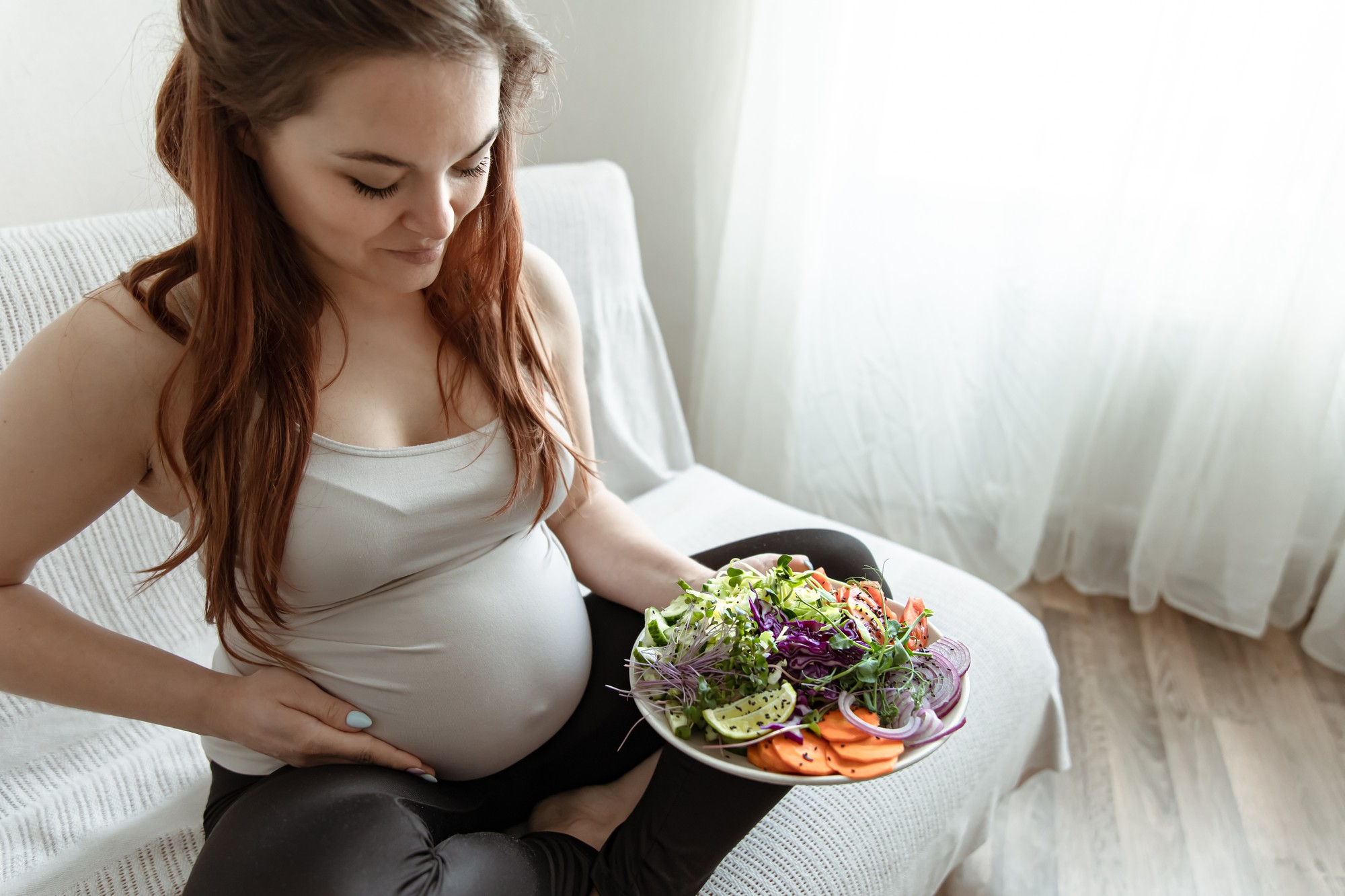
Nutrition During Pregnancy: Best Foods to Eat & Avoid for a Healthy Baby
Learn what to eat and avoid during pregnancy with expert-approved nutrition tips for a healthy mother and baby.
25 Nov 2025
by Prakash Hospital
by By Prakash Hospital

TDEE adds your resting metabolism to the energy spent digesting food, exercising and moving through the day.
TDEE stands for total daily energy expenditure. It's the number of calories your body burns in a full day, counting everything from keeping your heart beating to walking to the bus. To calculate it, you work out your BMR (the calories you burn at complete rest) with the Mifflin-St Jeor formula, then multiply by an activity factor between 1.2 and 1.9. The result is an estimate, typically within about 10 percent of the truth for most healthy adults, and a starting point you adjust with real-world data.
If you're trying to lose weight, you eat below your TDEE. To gain, you eat above it. To stay the same, you eat at it. Everything else in calorie counting is detail around that sentence. This guide does the detail: the formula, three worked examples, the multipliers (and why most people pick the wrong one), and how to correct your estimate after two weeks.
Your body spends energy in four ways.
1. BMR (basal metabolic rate). The energy needed to keep you alive at rest: breathing, circulation, brain activity, cell repair, temperature control. It's usually 60 to 70 percent of your TDEE. Strictly, BMR is measured under very controlled conditions. The related RMR (resting metabolic rate) is slightly higher and easier to measure; calculators use the terms loosely.
2. TEF (thermic effect of food). The energy used to digest, absorb and process food. About 10 percent of what you eat, and a bit more for protein than for fat or carbohydrate.
3. EAT (exercise activity thermogenesis). Planned exercise: a run, a gym session, a yoga class.
4. NEAT (non-exercise activity thermogenesis). Everything else you do on your feet: walking around the house, fidgeting, cooking, climbing stairs, standing in the metro. NEAT varies enormously between people and is often a bigger lever than formal exercise.
TDEE = BMR + TEF + EAT + NEAT.
Calculators wrap the last three into an activity multiplier.
The Mifflin-St Jeor equation (Mifflin and colleagues, 1990) is the one most dietitians use today. It tends to be more accurate than the older Harris-Benedict equation for modern adults.
Ankit, 30, weighs 75 kg and is 172 cm tall. BMR = (10 × 75) + (6.25 × 172) − (5 × 30) + 5 = 750 + 1,075 − 150 + 5 = 1,680 kcal.
Divya, 35, weighs 62 kg and is 158 cm tall. BMR = (10 × 62) + (6.25 × 158) − (5 × 35) − 161 = 620 + 987.5 − 175 − 161 = 1,271.5, or about 1,272 kcal.
Manoj, 40, weighs 90 kg and is 175 cm tall. BMR = 900 + 1,093.75 − 200 + 5 = 1,799 kcal.
| Activity level | Description | Multiplier | |---|---|---| | Sedentary | Desk job, little or no exercise | 1.2 | | Lightly active | Light exercise or walking 1 to 3 days a week | 1.375 | | Moderately active | Moderate exercise 3 to 5 days a week | 1.55 | | Very active | Hard exercise 6 to 7 days a week | 1.725 | | Extremely active | Physical job plus hard training | 1.9 |
Most people choose a multiplier that is too high. They look at their three gym sessions a week and pick "moderately active", forgetting that they sit for the other 15 hours of each day. If you work at a desk and exercise three times a week, "lightly active" (1.375) is often the more accurate choice. When in doubt, pick the lower one.
| Person | BMR | Sedentary (1.2) | Light (1.375) | Moderate (1.55) | Very active (1.725) | |---|---|---|---|---|---| | Ankit, 30, 75 kg | 1,680 | 2,016 | 2,310 | 2,604 | 2,898 | | Divya, 35, 62 kg | 1,272 | 1,526 | 1,748 | 1,971 | 2,193 | | Manoj, 40, 90 kg | 1,799 | 2,158 | 2,473 | 2,788 | 3,103 |
(All in kcal per day.)
If Ankit works at a desk and walks briskly three times a week, a sensible TDEE estimate is about 2,310 kcal. If Divya has a desk job and does light yoga, around 1,750 kcal.
Reasonably, but not precisely. The Mifflin-St Jeor equation predicts resting metabolic rate within about 10 percent of measured values for roughly 80 percent of healthy adults. That means a calculated 2,200 kcal could easily be 2,000 or 2,400 in reality, and for some individuals the error is larger.
What causes the gap:
None of this makes the number useless. It makes it a hypothesis.
The most reliable way to find your true TDEE is to use your own data:
This takes patience, and it works better than any formula.
Eat 300 to 500 kcal below your TDEE. This usually produces a loss of roughly 0.25 to 0.5 kg per week. Bigger deficits cost muscle, lower energy and are hard to sustain. As an example, Ankit's target would be about 1,800 to 2,000 kcal a day. Divya's would be roughly 1,250 to 1,450. Don't go below about 1,200 kcal (women) or 1,500 kcal (men) without medical supervision.
Eat at TDEE and let your weight settle.
Eat 300 to 500 kcal above TDEE, combined with strength training, so that more of the gain is muscle. We cover this in detail in our guide on calculating calories for weight gain.
For most people, yes in principle, and that's because the energy balance equation is not negotiable. The difficulty is behavioural, not mathematical. And some people have medical reasons weight is harder to move, which is why a check-up is worthwhile if nothing works.
Yes.
Total daily energy expenditure: the total calories you burn in a day, including rest, digestion and movement.
Calculate BMR using the Mifflin-St Jeor equation, then multiply by an activity factor from 1.2 to 1.9.
BMR is the calories you burn at rest. TDEE includes BMR plus the energy used for digestion, exercise and daily movement.
For many adults it ranges from about 1,500 to 3,000 kcal, depending on size, age, sex and activity. Calculate your own using the steps above.
Within roughly 10 percent for most people. Test it by tracking weight and food for two to three weeks.
No. Because body composition, genetics, hormones and activity vary, two people eating identical calories can see different results.
If you eat well below your TDEE and still don't lose weight, if you're losing weight while eating a lot, or if you have symptoms such as heat or cold intolerance, palpitations, extreme fatigue, hair loss or irregular periods, get your thyroid and other hormones checked.
Whether you live in Sector 18, Sector 62, Greater Noida West, or anywhere nearby, Prakash Hospital Noida is a trusted name for nutrition counselling and weight management in Noida. Our physicians and dietitians can help you turn these numbers into meals you will actually eat.
To book a consultation, call the number.
Sources: Mifflin MD, St Jeor ST et al. A new predictive equation for resting energy expenditure in healthy individuals. American Journal of Clinical Nutrition, 1990.
Tags: #WhatIsTDEE #CalorieCalculator #PrakashHospitalNoida

Home dialysis that uses the lining of the abdomen as a filter, with fluid exchanged through a soft tube every day.
Replaces a failed knee implant that is loose, worn, infected or unstable with new revision parts.
Examines the vocal cords under a microscope to remove growths or take a biopsy, working through the mouth.
Free tools to check your weight, plan a pregnancy, track calories and more.
We offer expert care across key specialties, including Medicine, Cardiology, Orthopaedics, ENT, Gynaecology, and more—delivering trusted treatment under one roof.
Learn what to eat and avoid during pregnancy with expert-approved nutrition tips for a healthy mother and baby.
25 Nov 2025
by Prakash Hospital
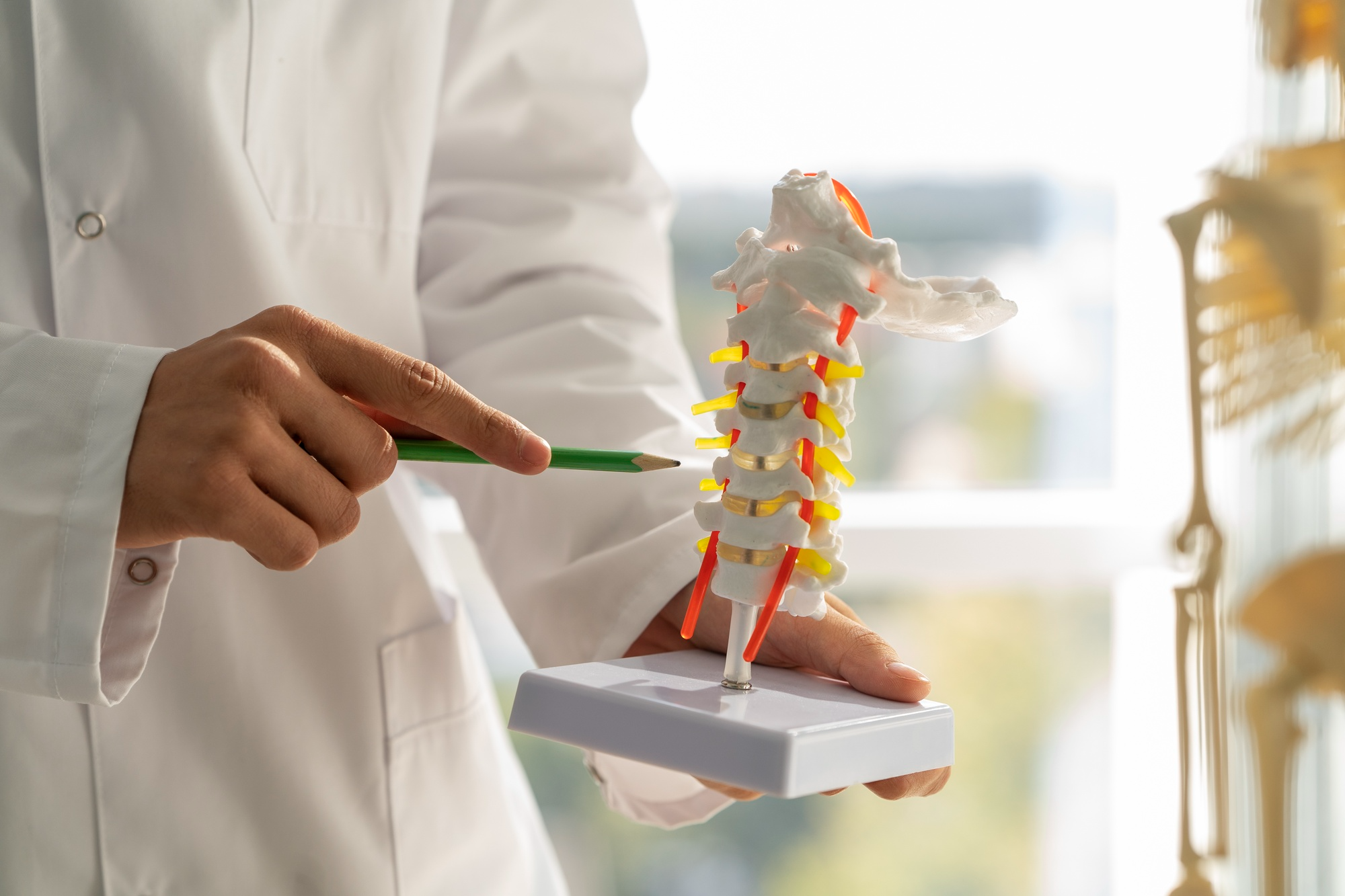
Support fracture recovery with essential nutrients like calcium, vitamin D, and protein for faster bone healing.
19 Nov 2025
by Prakash Hospital

Discover expert-backed nutrition tips for cancer patients. Learn how to manage treatment side effects, stay hydrated, and eat for strength and recovery.
27 May 2025
by Prakash Hospital

Why you can't focus and what helps: sleep, food, exercise, distraction control, medical causes and habits for sharper concentration. Prakash Hospital Noida.
9 Oct 2026
by Prakash Hospital

Learn about different types of headaches, their causes, warning signs, diagnosis, and treatment options.
26 Feb 2026
by Prakash Hospital

Know the early signs of a stroke, the BE-FAST check, what to do first and why minutes matter. Causes, risk factors and prevention. Prakash Hospital Noida.
22 Oct 2026
by Prakash Hospital

Magnesium deficiency symptoms like cramps, poor sleep and anxiety, why it is common in India, and the best Indian foods for magnesium. Prakash Hospital Noida.
1 Oct 2026
by Prakash Hospital

Vitamin D rich vegetables and fruits — what actually contains vitamin D and what is myth. Visit Prakash Hospital Noida for nutrition guidance.
30 Jun 2026
by Prakash Hospital

Intermittent fasting for Indians — what the evidence shows, how to fit it around Indian family meal times, and who should avoid it. Prakash Hospital Noida.
7 Oct 2026
by Prakash Hospital


Book a consultation with Prakash Hospital's specialists — 24/7 emergency care, 100+ doctors, NABH accredited.
View All Departments