


Yoga for Back Pain: Which Asanas Help and How to Do Them Safely
Yoga asanas for lower back pain that are evidence-backed, safe, and practical for Indian practitioners. Prakash Hospital Noida.
27 Aug 2026
by Prakash Hospital
by Prakash Hospital

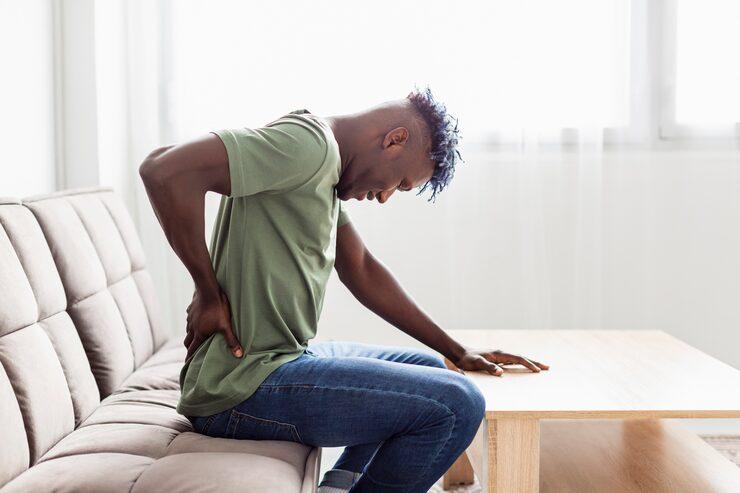
A man suffering from lower back pain while sitting, indicating slip disc due to poor posture.
Lower back pain is the leading cause of disability worldwide, and India carries a disproportionate share of this burden. Estimates suggest that 60–70% of Indians will experience significant lower back pain at some point in their lives. It's the most common reason adults miss work. It's one of the top three reasons people visit a doctor.
Yet most lower back pain is not caused by serious structural disease. The vast majority of episodes — roughly 85–90% — are what doctors call "non-specific lower back pain," meaning no identifiable disc herniation, fracture, tumour, or infection is responsible. The pain comes from muscle strain, ligament stress, poor posture, weak core muscles, or prolonged mechanical loading — all of which are modifiable.
This is simultaneously reassuring and actionable. Most lower back pain gets better. And the things that make it better are within reach.
The lumbar spine (lower back) carries the body's weight and transmits it through the pelvis to the legs. It handles the mechanical forces of every movement — bending, lifting, twisting, sitting, standing. Five vertebrae (L1–L5), intervertebral discs between them, facet joints at the back, the sacroiliac joints connecting spine to pelvis, and an elaborate web of muscles, ligaments, and nerves make up this region.
Several features make the lumbar spine prone to pain:
The most common cause overall. A sudden movement, lifting something heavy incorrectly, or sustained poor posture causes small tears in the muscles and ligaments supporting the lower back. This produces acute pain that typically peaks in the first 24–48 hours and then gradually improves over days to weeks.
Pain is typically diffuse — across the lower back rather than focused on one side. It worsens with movement and eases with rest. There's no nerve pain shooting down the leg. This type usually resolves without any specific treatment beyond activity modification and pain relief.
Between each pair of vertebrae is an intervertebral disc — a shock absorber with a soft gel-like centre (nucleus pulposus) surrounded by a tough outer ring (annulus fibrosus). Two main problems:
Disc bulge or herniation: the gel-like centre pushes through the outer ring, pressing against nearby spinal nerves. This is what most people mean when they say "slipped disc" — though the disc doesn't literally slip. When it presses on the sciatic nerve, it causes sciatica — pain that travels from the lower back through the buttock and down the back of the leg, sometimes reaching the calf or foot. The leg pain is often more prominent than the back pain itself. Numbness, tingling, and weakness in the leg can accompany it.
Disc degeneration: the discs gradually lose water content and height with age, reducing their shock-absorbing capacity. This contributes to chronic lower back ache in older adults.
The small joints at the back of each vertebra (facet joints) develop arthritis with age. This causes a deep, aching pain in the lower back, often worse in the morning with prolonged sitting, and easing with movement. Unlike disc herniation, it typically does not radiate far down the leg.
The sacroiliac joints connect the sacrum (base of the spine) to the pelvis. Dysfunction of these joints causes a very specific type of lower back and pelvic pain — often one-sided, in the buttock area and around the hip, worsening with prolonged sitting or standing and often with transitional movements (sitting to standing).
One vertebra slips forward over the one below it. Usually at L4–L5 or L5–S1. Can cause lower back pain and, when it compresses nerves, leg pain. Often found incidentally on imaging but can become symptomatic.
Narrowing of the spinal canal, usually from combined disc degeneration, facet arthritis, and ligament thickening. Causes neurogenic claudication — leg pain, heaviness, and weakness that comes on with walking and is relieved by sitting or leaning forward (because leaning forward opens the spinal canal slightly). More common in older adults.
In the Indian context, several specific patterns are particularly prevalent:
Prolonged sitting: desk workers sitting 8+ hours daily with poor ergonomics. The lumbar spine under sustained flexion load develops disc stress and the supporting muscles become deconditioned.
Prolonged standing and squatting: occupations involving sustained standing, lifting, or repetitive bending — construction, agriculture, domestic work — create different but equally significant mechanical loads.
Weak core muscles: the deep abdominal muscles (particularly transversus abdominis), the muscles around the spine (multifidus), and the gluteal muscles form the active stabilising system of the lumbar spine. When these are weak — common in sedentary adults — the passive structures (discs, ligaments, facet joints) bear more load than they're designed for.
Overweight: excess abdominal weight shifts the centre of gravity forward, increasing the lumbar lordosis (inward curve) and the load on the lumbar discs.
A minority of lower back pain has a non-mechanical cause — these are the important ones not to miss:
Kidney problems: kidney stones or infections cause flank pain (between the ribs and hip) that may be confused with back pain. Kidney pain is usually one-sided, comes in waves (renal colic from stones) or is constant with fever (infection), and is not altered by posture or movement.
Aortic aneurysm: a bulging of the main artery in the abdomen. Causes deep, constant, severe back or abdominal pain particularly in older men with cardiovascular risk factors. A medical emergency.
Spinal infections, inflammatory arthritis (ankylosing spondylitis): chronic morning stiffness lasting more than an hour in a young adult, improving with exercise and worsening with rest, is a pattern that suggests ankylosing spondylitis rather than mechanical back pain.
Red flags: lower back pain with any of the following requires urgent medical evaluation — unexplained weight loss, fever, history of cancer, age above 50 with sudden onset of severe pain, loss of bladder or bowel control, weakness in both legs, or pain that is severe and constant without any position providing relief.
Most non-specific lower back pain does not need imaging. Guidelines consistently show that routine X-rays and MRIs for first episodes of lower back pain without red flags do not improve outcomes and often lead to incidental findings that cause unnecessary anxiety and intervention.
Imaging is appropriate when:
The outdated advice of bed rest for back pain has been comprehensively overturned. Bed rest delays recovery. The evidence is unambiguous: continuing normal activities as far as pain allows is better than rest. Movement maintains muscle function, prevents the deconditioning that comes with prolonged rest, and promotes recovery.
This doesn't mean pushing through severe pain. It means avoiding the extreme of lying in bed for days. Walking, gentle stretching, and returning to normal activities within pain limits is the goal.
Paracetamol for mild to moderate pain. Safe, effective, first-line.
NSAIDs (ibuprofen, naproxen, diclofenac): more effective than paracetamol for inflammatory back pain. Use for the shortest necessary period. Take with food. Avoid if kidney disease or peptic ulcer history.
Topical NSAIDs (diclofenac gel): applied directly to the lower back. Effective and with fewer gastrointestinal side effects than oral NSAIDs.
Muscle relaxants: methocarbamol, cyclobenzaprine — useful for the acute spasm component in the first few days. Cause drowsiness. Not for long-term use.
Heat packs: applying heat to the lower back reduces muscle spasm and pain. More effective than cold for muscle-related back pain (cold is better for acute injury in the first 24 hours). A hot water bottle or heating pad applied for 15–20 minutes several times daily.
For subacute and chronic lower back pain (beyond 4–6 weeks), exercise is the most evidence-backed intervention available. No medication is as effective long-term.
Core strengthening: exercises that build the deep abdominal and back muscles that support the spine. Pelvic tilts, bird-dog, dead bugs, modified planks. These muscles are often the weak link.
McKenzie method: a specific physiotherapy approach involving extension-based exercises for disc-related pain. Particularly effective when the pain is centralised (brought toward the spine) rather than peripheralised (going further down the leg) with extension.
Yoga: multiple Indian and international trials show yoga reduces chronic lower back pain significantly. Specific asanas — cat-cow (marjariasana), child's pose (balasana), supine knee-to-chest (pavanamuktasana), and bridge pose (setu bandhasana) — are well-studied for lower back pain. More on this in the dedicated yoga blog (P5-17).
Swimming and walking: excellent low-impact activities that maintain fitness without excessive spinal loading.
Sitting ergonomics matter more than most people realise. A lumbar support (or even a rolled towel) behind the lower back, screen at eye level, feet flat on the floor, and frequent breaks from sitting (stand or walk for 2 minutes every hour) reduce the mechanical load that desk work places on the lumbar spine.
Lifting technique: bend the knees, not the waist; keep the object close to the body; avoid twisting while lifting.
Surgery is rarely needed and should be a last resort. Specific indications:
Most disc herniations improve without surgery over 6–12 weeks. Conservative management is appropriate as first-line even for moderate sciatica.
At Prakash Hospital Noida, our physicians and orthopaedic team assess lower back pain — with clinical evaluation, imaging where indicated, physiotherapy referral, pain management, and specialist review for complex cases. Emergency assessment for red flag symptoms is available.
Whether you live in Sector 18, Sector 62, Greater Noida West, or anywhere in the NCR, Prakash Hospital Noida is a trusted name for lower back pain, orthopaedics, and musculoskeletal care in Noida.
To book a consultation, call the number.
Tags: #LowerBackPain #BackPainRelief #PrakashHospitalNoida

This article covers orthopaedic concerns. These Prakash Hospital doctors in Noida treat them.

Dr. Mayank Chauhan
Consultant Orthopaedics & Joint Replacement Surgeon
Orthopaedics · Joint Replacement

Dr. Manoj Mehra
Consultant Orthopaedics Surgeon
Orthopaedic Surgeon · Joint Replacement Surgeries
Frees a trapped spinal nerve by removing slipped disc or bone, easing sciatica and leg pain.
Reattaches or rebuilds torn ligaments in the knee, ankle, elbow or thumb to steady an unstable joint.
Replaces a damaged shoulder ball and socket to relieve arthritis pain and help you use your arm again.
Free tools to check your weight, plan a pregnancy, track calories and more.
We offer expert care across key specialties, including Medicine, Cardiology, Orthopaedics, ENT, Gynaecology, and more—delivering trusted treatment under one roof.
Yoga asanas for lower back pain that are evidence-backed, safe, and practical for Indian practitioners. Prakash Hospital Noida.
27 Aug 2026
by Prakash Hospital
Exercises for lower back pain that actually work — safe, home-friendly movements for pain relief and prevention. Prakash Hospital Noida.
24 Aug 2026
by Prakash Hospital

Back pain during pregnancy — why it happens, which types are normal, and safe ways to relieve it. Prakash Hospital Noida.
25 Aug 2026
by Prakash Hospital
Learn the warning signs of brain hemorrhage, possible causes, emergency treatment options, and why immediate medical attention is critical.
19 May 2026
by Prakash Hospital

Learn about different types of headaches, their causes, warning signs, diagnosis, and treatment options.
26 Feb 2026
by Prakash Hospital

बार-बार भूलना कब सामान्य है और कब यह गंभीर बीमारी का संकेत हो सकता है? मेमोरी लॉस के कारण, चेतावनी संकेत, जांच और इलाज के बारे में विस्तार से जानें।
25 Feb 2026
by Prakash Hospital
Discover expert-approved orthopedic fitness strategies with safe exercises to support your joints, reduce pain, and improve mobility. Ideal for all age groups.
25 Jun 2025
by Prakash Hospital
Learn how bones heal after a fracture, from inflammation to remodeling. Understand the stages of bone healing, recovery time, and tips for faster healing.
15 Dec 2025
by Prakash Hospital

Discover calcium rich foods for strong bones, daily calcium needs, deficiency signs, absorption tips, and how to maintain lifelong bone health.
6 Jan 2026
by Prakash Hospital


Book a consultation with Prakash Hospital's specialists — 24/7 emergency care, 100+ doctors, NABH accredited.
View All Departments