


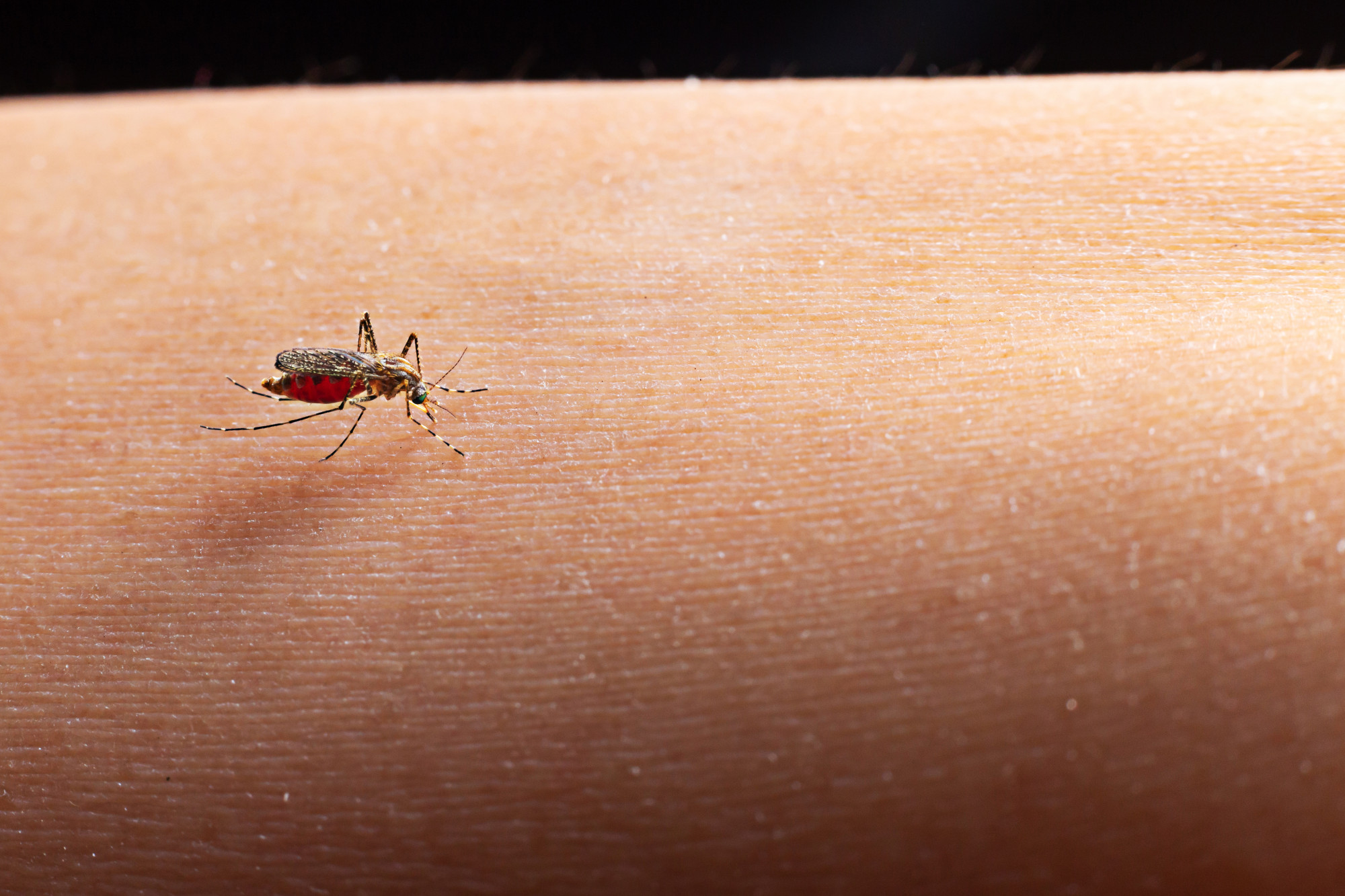
Dengue Symptoms: What to Watch For and When to Go to Hospital
Dengue fever symptoms, warning signs of severe dengue, what to eat, and when to go to hospital. Prakash Hospital Noida, Noida.
18 Aug 2026
by Prakash Hospital
by Prakash Hospital

Woman experiencing fever as a symptom of dengue.
Every monsoon season in India, the same scene plays out across hospitals and clinics in Noida and across the NCR: a patient presents with high fever, body pain, and weakness. They've been unwell for two to three days. They've tried paracetamol. Their family is worried. And the question — almost always unanswered from symptoms alone — is whether this is dengue, malaria, or chikungunya.
These three mosquito-borne illnesses are the dominant causes of acute febrile illness during and after the monsoon months in North India. They share enough overlapping symptoms to make clinical distinction genuinely difficult. They also have enough differences in their serious complications that treating the wrong one — or missing the right one — matters.
Here is what the differences look like in practice.
Dengue: caused by dengue virus (DENV), transmitted by the Aedes aegypti mosquito, which bites primarily during the day. Has four serotypes. Second infection with a different serotype carries higher risk of severe dengue. Peak incidence: July to November.
Malaria: caused by Plasmodium parasites (vivax and falciparum most common in India), transmitted by the Anopheles mosquito, which bites at night. Falciparum can progress rapidly to life-threatening complications. Peak incidence: July to September.
Chikungunya: caused by the chikungunya virus, also transmitted by Aedes mosquitoes (same vector as dengue, same biting time). No severe internal organ complications like dengue or falciparum malaria, but joint pain that can persist for months to years. Peak incidence: July to November.
All three cause significant fever, but the patterns differ.
Dengue: sudden onset of high fever (38.5–40°C) that typically appears within 3–14 days after the mosquito bite. The "saddle-back" pattern — fever for 3–4 days, apparent improvement, then fever returning for another day or two — is characteristic but not universal.
Malaria: the cyclical or periodic fever is the hallmark — rigors (shaking chills), then high fever, then profuse sweating, then a period of relative normality before the cycle repeats every 48 hours (vivax, falciparum) or 72 hours (malariae). This periodicity is more obvious in vivax than falciparum. Early malaria fever may be irregular.
Chikungunya: sudden, high fever (often 39–40°C) that tends to resolve more quickly than dengue — often within a week.
Practical implication: a cyclical fever with dramatic shivering attacks points strongly toward malaria. A sudden high fever with rash points more to dengue or chikungunya.
This is one of the most diagnostically useful differences.
Dengue: muscle pain (myalgia) and bone pain are classic — the "breakbone fever" description reflects the severity. Joint pain (arthralgia) is present but not typically the dominant feature.
Malaria: muscle aches and body pain are present but generally moderate. Not the defining feature.
Chikungunya: the defining feature. Joint pain in chikungunya is often described as the most severe pain the patient has ever experienced. Both small and large joints are affected — fingers, wrists, ankles, knees — often symmetrically. The pain is intense, can be disabling, and — critically — can persist for months to years after the acute infection resolves. The word "chikungunya" in the Makonde language means "to walk bent over" — describing the posture adopted due to joint pain.
Practical implication: if joint pain is the most prominent and debilitating symptom, and particularly if it persists after fever resolves, chikungunya is the leading diagnosis.
Dengue: a characteristic maculopapular rash (flat red patches with some raised areas) appears in approximately 50–80% of patients, typically on days 3–5 of illness. It starts on the trunk and spreads outward. Another pattern: a white area surrounded by red (islets of white in a sea of red). The rash may itch.
Malaria: rash is not a feature of malaria. Its absence doesn't rule it out, but a significant rash in a febrile patient reduces (though doesn't eliminate) the likelihood of malaria as the sole diagnosis.
Chikungunya: a maculopapular rash similar to dengue occurs in a significant proportion of patients, typically in the first few days of illness.
Practical implication: rash is common in dengue and chikungunya, uncommon in malaria. It doesn't distinguish dengue from chikungunya reliably.
Dengue: retroorbital pain — a specific deep aching pain felt behind the eyes, worsened by eye movement — is highly characteristic of dengue. Headache is prominent.
Malaria: significant headache is common, particularly during the fever phase. Retroorbital pain is less characteristic than in dengue.
Chikungunya: headache is present but generally less prominent than dengue or malaria.
Practical implication: retroorbital pain (described as "pain behind the eyes when I move them") is a strong pointer toward dengue.

woman suffering from headache
Dengue: mild chills may occur but dramatic shaking rigors are not typical.
Malaria: dramatic, uncontrollable shaking rigors in the cold stage of each malaria paroxysm are one of the most characteristic features. People describe the shaking as uncontrollable and frightening.
Chikungunya: mild chills possible, dramatic rigors not characteristic.
Practical implication: dramatic shaking chills almost always point to malaria.
Dengue: platelet count drops significantly. This is the major safety concern in dengue — severe thrombocytopenia (platelet count below 20,000–30,000) raises risk of bleeding. Daily platelet monitoring is standard in dengue management.
Malaria: platelet count drops moderately. Less likely to cause the very low counts seen in severe dengue, but thrombocytopenia is present.
Chikungunya: platelet count drops mildly. Rarely reaches levels causing bleeding concern.
Practical implication: very low platelets (below 50,000) with fever during monsoon is high alert for dengue.
Dengue: the key complication is plasma leakage — the virus increases vascular permeability, fluid leaks from blood vessels, blood pressure can drop. Dengue haemorrhagic fever and dengue shock syndrome are life-threatening. Bleeding from mucous membranes or gastrointestinal tract.
Falciparum malaria: cerebral malaria (brain involvement), acute kidney failure, severe anaemia, pulmonary oedema. These complications can progress within 24–48 hours and are medical emergencies.
Chikungunya: chronic polyarthritis (ongoing joint pain for months to years) is the major long-term complication. Serious organ complications are rare. Encephalitis and cardiac involvement have been reported in elderly and immunocompromised patients but are uncommon.
Dengue: acute illness typically resolves in 7–10 days. Fatigue and weakness may persist for several weeks (post-dengue fatigue is well recognised).
Malaria (vivax): acute illness resolves with treatment within a week, but relapse from dormant liver forms (hypnozoites) can occur months later if radical cure (primaquine) was not completed. Falciparum, once treated, doesn't relapse from the liver.
Chikungunya: acute illness resolves within 7–10 days, but joint pain can persist for months to years in a significant proportion of patients. Post-chikungunya arthritis can be genuinely disabling.
Symptoms alone cannot reliably distinguish these three illnesses. The clinical overlap is too significant. Testing is necessary, and during monsoon season, testing for more than one at a time is often appropriate.
For dengue: NS1 antigen (positive days 1–5), dengue IgM/IgG antibodies (positive from day 5). Complete blood count to monitor platelet count.
For malaria: rapid diagnostic test (RDT) — result in 15–20 minutes, fingerprick. Peripheral blood smear for species identification and parasite count.
For chikungunya: chikungunya IgM antibodies (become positive from day 5–7). Clinical diagnosis is often made on the characteristic joint pain presentation.
Because dengue and malaria testing are quick and readily available, and because the treatments are different and the complications of missing each are significant, testing upfront rather than treating empirically is the recommended approach.
Yes. Co-infections with dengue and malaria, or dengue and chikungunya, have been documented, particularly during peak monsoon season when both Aedes and Anopheles mosquito populations are high simultaneously. Co-infection can make clinical presentation more complex and is one reason that testing for both is appropriate in severe presentations.
For all three conditions, paracetamol is the appropriate medication for fever and pain. Aspirin and ibuprofen (NSAIDs) should be avoided:
| Symptom | Dengue | Malaria | Chikungunya | |---|---|---|---| | Onset | Sudden | Gradual → cyclical | Sudden | | Fever type | High, may saddle-back | Periodic, cyclic | High, brief | | Rigors | Mild | Dramatic shaking | Mild | | Joint pain | Moderate | Mild | Severe, prolonged | | Retroorbital pain | Yes, characteristic | Less prominent | No | | Rash | Common | Rare | Common | | Platelet drop | Severe | Moderate | Mild | | Dangerous complications | Plasma leakage, bleeding | Cerebral malaria, kidney failure | Chronic arthritis | | Mosquito biting time | Day | Night | Day |
At Prakash Hospital Noida, our physicians provide rapid diagnostic testing for dengue (NS1 antigen, IgM/IgG), malaria (RDT and blood smear), and chikungunya, with same-day results available. Complete blood count, platelet monitoring, and management of all three conditions are available — including inpatient care for severe dengue and severe malaria.
Whether you live in Sector 18, Sector 62, Greater Noida West, or anywhere in the NCR, Prakash Hospital Noida is a trusted name for monsoon fever diagnosis, dengue and malaria care, and general medicine in Noida.

This article covers general medicine concerns. These Prakash Hospital doctors in Noida treat them.

Dr. Birendra Pawar
Consultant Internal Medicine
Hysterectomies · Laparoscopic Hysterectomies · Gynecological Pathologies

Dr. Sunil P. Chaudhary
Consultant Internal Medicine
Diabetes · Hypertension · Thyroid Disorders
Anti-wrinkle injections and hyaluronic acid fillers that soften lines and restore facial volume, with no downtime.
Frees a trapped spinal nerve by removing slipped disc or bone, easing sciatica and leg pain.
A camera through the cervix to see inside the uterus and remove polyps, small fibroids or scar tissue, with no cuts.
Free tools to check your weight, plan a pregnancy, track calories and more.
We offer expert care across key specialties, including Medicine, Cardiology, Orthopaedics, ENT, Gynaecology, and more—delivering trusted treatment under one roof.
Dengue fever symptoms, warning signs of severe dengue, what to eat, and when to go to hospital. Prakash Hospital Noida, Noida.
18 Aug 2026
by Prakash Hospital

Learn the early symptoms of dengue, its stages, warning signs, and when to seek medical help for timely diagnosis and effective treatment.
27 Apr 2026
by Prakash Hospital
Learn everything about dengue like its symptoms, causes, diagnosis, treatment, and prevention at Prakash Hospital.
26 Dec 2025
by Prakash Hospital

Male infertility causes, from varicocele to heat and smoking, the semen analysis, and what helps — a practical guide for Indian men. Prakash Hospital Noida.
7 Oct 2026
by Prakash Hospital

जानिए किडनी फंक्शन टेस्ट (KFT) क्या होता है, यह किन-किन पैरामीटर्स को मापता है और किडनी की सेहत के बारे में क्या जानकारी देता है।
11 May 2026
by Prakash Hospital

Prostate problems — symptoms of BPH, prostatitis and prostate cancer, the tests used to diagnose them, and when to see a doctor. Prakash Hospital Noida.
5 Oct 2026
by Prakash Hospital

Science-backed ways to strengthen your immune system naturally through diet, sleep, exercise, and lifestyle. Prakash Hospital Noida.
30 Jul 2026
by Prakash Hospital

Learn the early symptoms of thyroid problems in women, common causes, and when to seek medical advice for timely diagnosis and treatment.
13 May 2026
by Prakash Hospital
Understand hypertension causes, risks, and lifestyle changes to manage high blood pressure effectively.
5 Jun 2025
by Prakash Hospital


Book a consultation with Prakash Hospital's specialists — 24/7 emergency care, 100+ doctors, NABH accredited.
View All Departments